
Recently Added
Stalking Prevention, Awareness, and Resource Center (SPARC)
Responding to Military-Connected Survivors of Stalking
Stalking Prevention, Awareness, and Resource Center (SPARC)
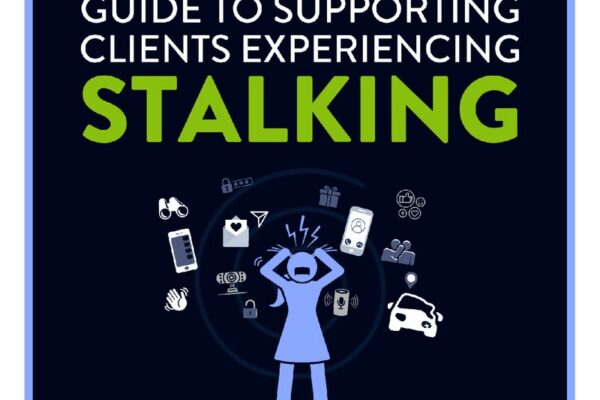
Mental Health Professionals’ Guide to Supporting Clients Experiencing Stalking
Stalking Prevention, Awareness, and Resource Center (SPARC)
Listening for Stalking in Mental Health Settings
Stalking Prevention, Awareness, and Resource Center (SPARC)
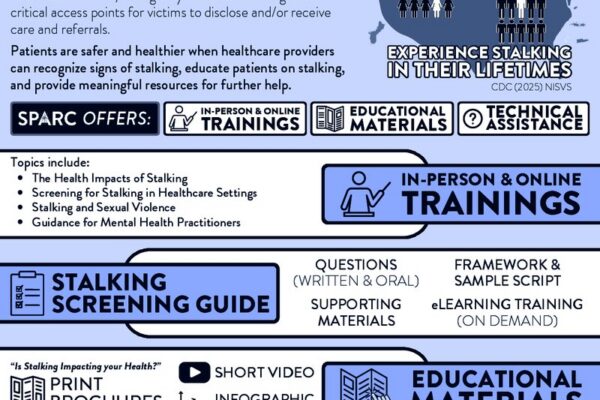
Guide to Screening for Stalking in Healthcare Settings
Stalking Prevention, Awareness, and Resource Center (SPARC)
Understanding the Counterman v. Colorado Supreme Court Decision
Battered Women’s Justice Project
ESPOC: Technical Assistance Provider Listening Sessions Findings Report
This report details the findings from two listening sessions of national training and technical assistance providers to identify considerations, risks and conditions necessary for safe, fair and enforceable eService implementation in civil protection order cases.
Battered Women’s Justice Project
ESPOC: Considerations for Technology Solutions Providers
This document is for courts and process servers considering Electronic Service (eService) for civil protection orders (CPOs). It outlines the key considerations for selecting, designing, and evaluating an eService platform for CPOs. These include user experience, reliability of service, platform stability, authentication and security controls, integration capabilities, information security requirements, cultural and operational barriers, and the essential role of law enforcement in certain service scenarios.
National Network to End Domestic Violence
Guía Sobre la Inteligencia Artificial de Safety Net para Las Personas Sobrevivientes: Descubra qué es la IA, Proteja su Autonomía y Tome Decisiones Informadas y Empoderadas
La tecnología está evolucionando rápidamente y las herramientas de inteligencia artificial (IA) están comenzando a formar parte de cada vez más experiencias cotidianas. Si bien la IA tiene el potencial de ahorrar tiempo y ampliar el acceso a recursos, estas mismas herramientas también pueden implicar riesgos graves para su seguridad, privacidad y confianza, especialmente si usted ha sido víctima de violencia doméstica, agresión sexual, acoso, abuso facilitado por la tecnología u otras formas de trauma. Algunas herramientas de IA pueden ofrecer consejos o consuelo que parecen humanos, pero que en realidad resultan engañosos o inseguros, y la mayoría almacena discretamente, y en algunos casos incluso comparte lo que usted les dice.
En la Red Nacional para Acabar con la Violencia Doméstica (NNEDV, por sus siglas en inglés), creemos que las personas sobrevivientes merecen contar con información clara y confiable sobre cómo funcionan las herramientas de inteligencia artificial, qué riesgos implican y qué opciones pueden existir para las personas sobrevivientes y sus seres queridos, quienes utilizan estas tecnologías. Esta guía se ha creado para ayudarle a tomar decisiones informadas y seguras sobre si desea utilizar o no la inteligencia artificial y cómo hacerlo según sus propias condiciones.

National Network to End Domestic Violence
The Safety Net Survivor’s Guide to Artificial Intelligence (AI): Understanding Artificial Intelligence, Protecting Your Autonomy, and Making Empowered Choices
Technology is evolving quickly, and artificial intelligence (AI) tools are becoming part of more and more everyday experiences. While AI does have the potential to save time and expand access to resources, these same tools can also introduce serious safety, privacy, and trust risks, especially for survivors of domestic violence, sexual assault, stalking, technology-facilitated abuse, and other forms of trauma. Some AI tools may offer advice or comfort that sounds human, but is actually misleading or unsafe, and most of them quietly store–and sometimes even share–what you tell them.
At the National Network to End Domestic Violence (NNEDV), we believe survivors deserve clear, trustworthy information about how AI tools work, what risks they carry, and what options may exist for survivors and their loved ones who engage with these technologies. This guide was created to support you in making informed, confident choices about if or how you use AI, on your own terms.
National Network to End Domestic Violence
Inteligencia Artificial (IA) y Servicios para Víctimas: Guía para Las Personas Intercesoras
Las herramientas de inteligencia artificial (IA) están empezando a formar parte de casi todas las profesiones, y los servicios para víctimas no son la excepción. Aunque la IA puede ayudar a ahorrar tiempo y facilitar el acceso a recursos, también puede representar riesgos serios para la seguridad, la privacidad y la confianza, sobre todo cuando se trabaja con personas sobrevivientes de violencia doméstica, agresión sexual, acoso, abuso facilitado por la tecnología y otras experiencias traumáticas.
Esta guía fue creada para ofrecer orientación práctica y apoyar a quienes brindan servicios a víctimas (VSP, por sus siglas en inglés) y a otras personas defensoras en la toma de decisiones informadas y coherentes con su misión sobre si usar o no herramientas de IA en el contexto de los servicios a víctimas y cómo hacerlo.
National Network to End Domestic Violence
Artificial Intelligence and Victim Services: A Comprehensive Guide for Advocates
Artificial intelligence (AI) tools are becoming embedded in nearly every profession, and victim services are no exception. While AI does have the potential to save time and expand access to resources, these same tools can also introduce serious safety, privacy, and trust risks, especially when working with survivors of domestic violence, sexual assault, stalking, technology-facilitated abuse, and other forms of trauma.
This guide is designed to share practical guidance and help victim service providers (VSPs) and other advocates make informed, mission-aligned decisions about whether and how to use AI tools in the context of victim services.

Attorney Safety Guide
Attorneys who work on cases involving domestic and dating violence, sexual assault, and stalking (DVSAS) face a disproportionate amount of threatened and actual violence compared to attorneys who practice in other fields. We created the Attorney Safety Guide to provide civil attorneys who represent survivors of DVSAS, as well as leadership at legal services organizations serving DVSAS survivors, with information and resources to help them preempt and address safety concerns often affecting attorneys in the field.

Alliance for HOPE International
Pets and Family Justice Centers Toolkit
Battered Women’s Justice Project
Court Practice in Domestic Violence Protection Order Cases: Creating Court Summary Information Forms
Because protection orders can be the basis by which someone is ineligible to receive a firearm, a National Instant Criminal Background Check relies on state, local and tribal court protection order information. Generally, protection order information can be entered into the National Crime Information Center (NCIC) Protection Order Files (POF) and/or the NICS Indices. The easiest way to ensure that the proper information is uploaded from state, tribal and local justice system databases into federal databases that are used to conduct background checks is to develop a summary information form or cover sheet that includes all of the information needed for NICS to run a firearms-related background check and is completed at the time the related protection order is issued. This resource details all of the information that a summary information form would need to include and provides a sample form.

Battered Women’s Justice Project
Court Practice in Misdemeanor Crimes of Domestic and Dating Violence Cases: Creating Court Summary Information Forms
Because misdemeanor convictions for crimes of domestic and dating violence can be the basis by which someone is prohibited from receiving a firearm, the National Instant Criminal Background Check System at the FBI relies on state, local and tribal court criminal records information. Generally, information about convictions for misdemeanor crimes of domestic and dating violence can be entered into the National Crime Information Center (NCIC), the Interstate Identification Index (III), and/or the NICS Indices. The easiest way to ensure that the proper information is uploaded from state, Tribal and local justice system databases into federal databases that are used to conduct background checks is to develop a summary information form or cover sheet that includes all of the information needed for NICS to run a firearms-related background check and is completed at the time the conviction is entered. This resource identifies the information that should be included in such a cover sheet and provides a sample.