
Recently Added
Stalking Prevention, Awareness, and Resource Center (SPARC)
Responding to Military-Connected Survivors of Stalking
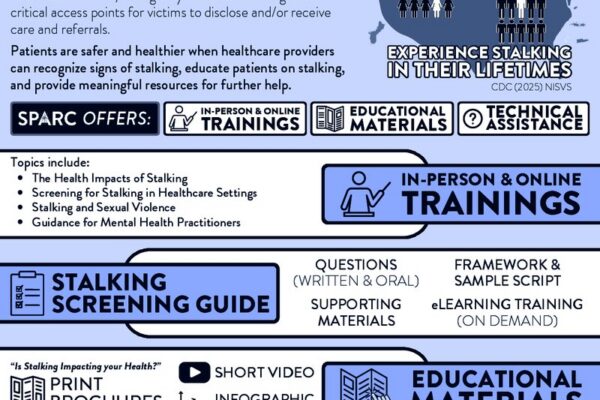
Stalking Prevention, Awareness, and Resource Center (SPARC)
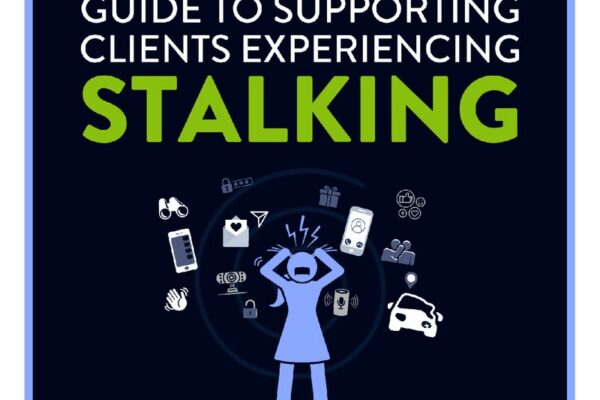
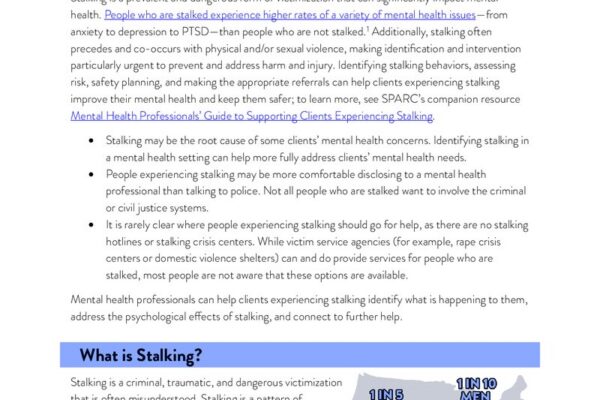
Mental Health Professionals’ Guide to Supporting Clients Experiencing Stalking
Stalking Prevention, Awareness, and Resource Center (SPARC)
Listening for Stalking in Mental Health Settings
Stalking Prevention, Awareness, and Resource Center (SPARC)
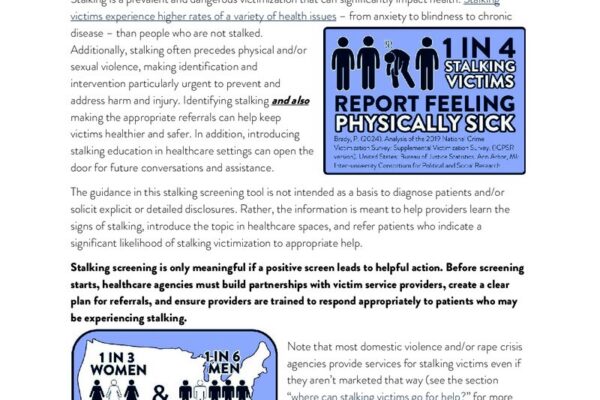
Guide to Screening for Stalking in Healthcare Settings
Stalking Prevention, Awareness, and Resource Center (SPARC)
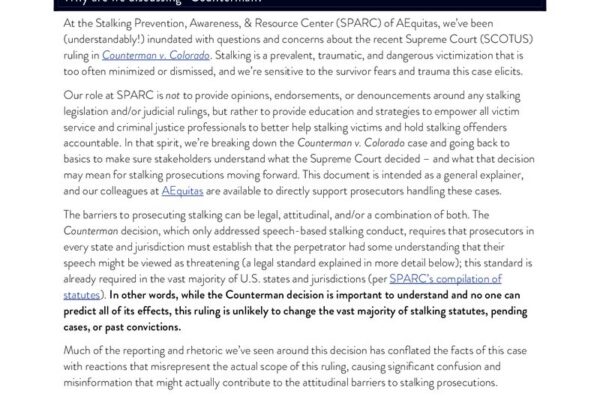
Understanding the Counterman v. Colorado Supreme Court Decision
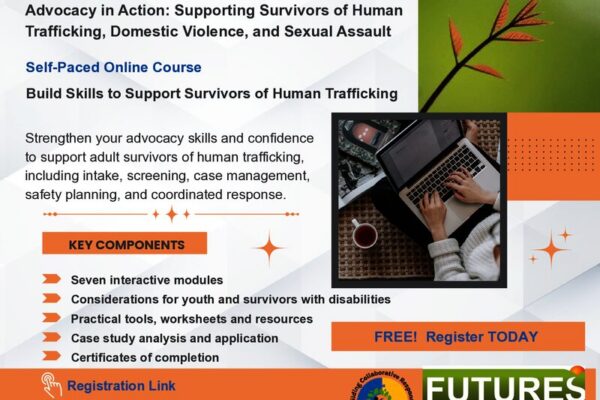
Advocacy in Action: Supporting Survivors of Human Trafficking, Domestic Violence, and Sexual Assault Self-Paced Course
This trauma-informed course strengthens advocates’ skills in supporting survivors of human trafficking who have also experienced domestic and/or sexual violence, with a focus on intake, assessment, case management, and collaborative support
Course Modules
Module 1: Overlapping Experiences of Human Trafficking, Domestic and Sexual ViolenceModule 2: Impacts of Trauma and Protective StrategiesModule 3: Foundations for Survivor Intake and Case ManagementModule 4: Screening for Human Trafficking and Identifying Survivor NeedsModule 5: Safety Planning with SurvivorsModule 6: Collaborating for Survivor Support: Confidentiality and PartnershipsModule 7: Ensuring Continuity of Care and Long-Term Support
National Network to End Domestic Violence
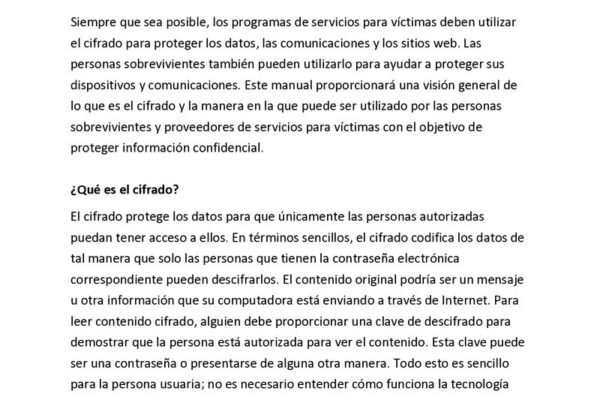
Conceptos básicos de cifrado para programas Atención a las personas sobrevivientes de la violencia de género
El cifrado ayuda a proteger la información del acceso indeseado o sin autorización. Las opciones de cifrado están disponibles en la mayoría de los dispositivos inteligentes y las plataformas en línea.
Siempre que sea posible, los programas de servicios para víctimas deben utilizar el cifrado para proteger los datos, las comunicaciones y los sitios web. Las personas sobrevivientes también pueden utilizarlo para ayudar a proteger sus dispositivos y comunicaciones. Este manual proporcionará una visión general de lo que es el cifrado y la manera en la que puede ser utilizado por las personas sobrevivientes y proveedores de servicios para víctimas con el objetivo de proteger información confidencial.
National Network to End Domestic Violence
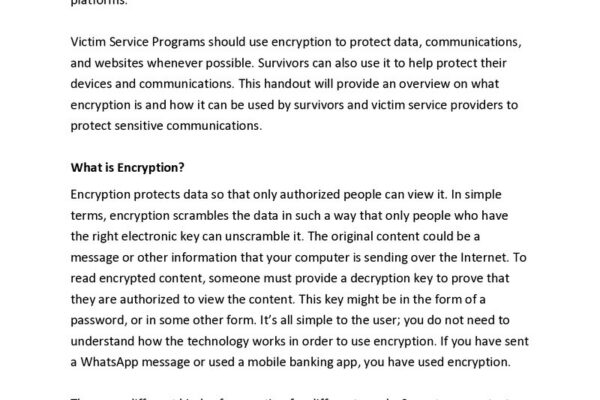
Encryption Basics for Programs Serving Survivors of Gender-Based Violence Encryption
Encryption helps to protect information from unauthorized and unwanted access. Options for encryption are available on most smart devices and online platforms.
Victim Service Programs should use encryption to protect data, communications, and websites whenever possible. Survivors can also use it to help protect their devices and communications. This handout will provide an overview on what encryption is and how it can be used by survivors and victim service providers to protect sensitive communications.
National Network to End Domestic Violence
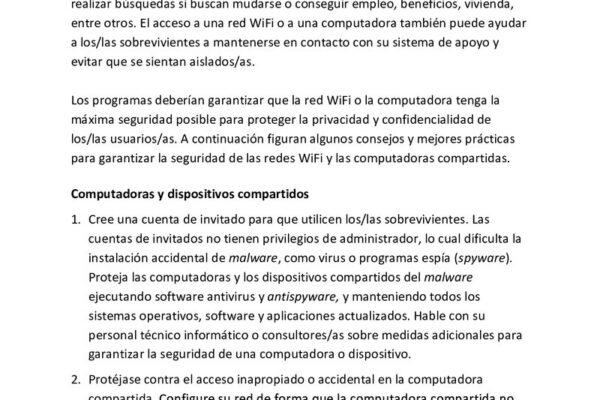
Computadoras compartidas y acceso a Internet: mejores prácticas para la privacidad y seguridad
Muchos programas de servicio para víctimas cuentan con redes WiFi o computadoras disponibles para que utilicen los/las sobrevivientes. Los/las sobrevivientes pueden usar una computadora compartida o la red WiFi para realizar búsquedas si buscan mudarse o conseguir empleo, beneficios, vivienda, entre otros.
Los programas deberían garantizar que la red WiFi o la computadora tenga la máxima seguridad posible para proteger la privacidad y confidencialidad de los/las usuarios/as. A continuación figuran algunos consejos y mejores prácticas para garantizar la seguridad de las redes WiFi y las computadoras compartidas.
National Network to End Domestic Violence
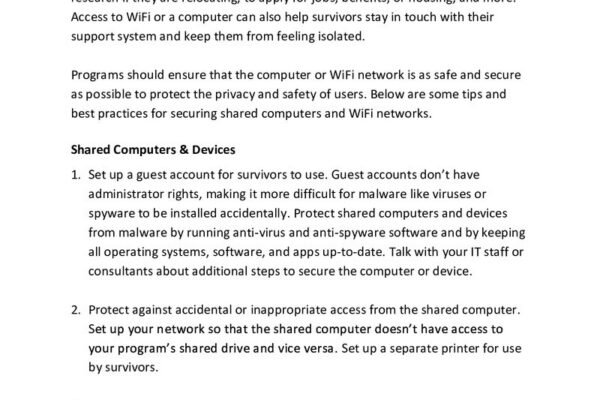
Shared Computers and Internet Access: Best Practices for Privacy & Security
Many victim service programs have computers or WiFi networks available for survivors to use. Survivors can use a shared computer or WiFi network to do research if they are relocating, to apply for jobs, benefits, or housing, and more. Programs should ensure that the computer or WiFi network is as safe and secure as possible to protect the privacy and safety of users. This resource provides tips and best practices for securing shared computers and WiFi networks.
Battered Women’s Justice Project
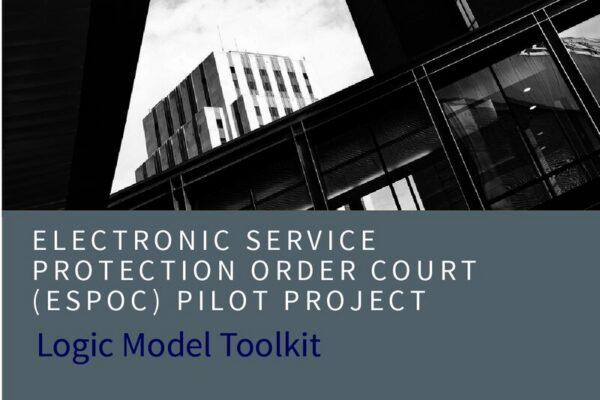
ESPOC: Logic Model Toolkit
This document was created for the OVW Electronic Service Protection Order Court (ESPOC) Pilot Project grantees. It includes three resources: foundational guidance on logic models, a completed example, and a blank template.
National Alliance to End Sexual Violence
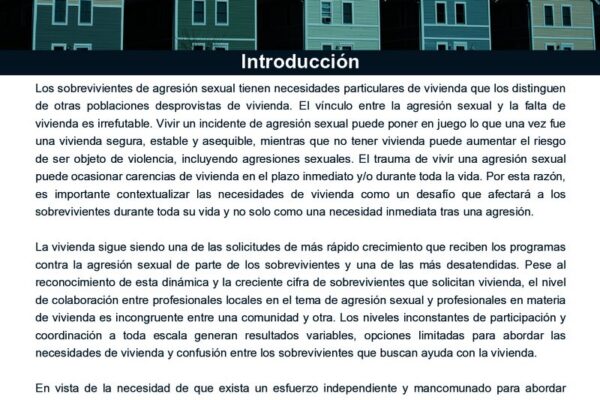
Kit de herramientas vivienda tras la agresión sexual
En vista de la necesidad de que exista un esfuerzo independiente y mancomunado para abordar estos desafíos singulares en cuanto a la vivienda, particularmente para aquellos sobrevivientes cuyas experiencias ocurren (u ocurrieron) fuera del contexto de la violencia doméstica, el National Sexual Assault Housing Collaborative (Colaborativo nacional de vivienda tras la agresión sexual) ha desarrollado este conjunto de herramientas para:
– que los proveedores de servicios ante la agresión sexual adquieran conocimientos fundamentales en torno a la vivienda y preparen a los intercesores para satisfacer las necesidades de vivienda de los sobrevivientes durante todas las etapas de la vida, y
– los profesionales en materia de vivienda, incluyendo los proveedores de servicios de vivienda transicional, a fin de resaltar los desafíos particulares que presentan los sobrevivientes de agresión sexual y mejorar los resultados de vivienda para esta población.
Está compuesto de recursos descargables diseñados para alentar a las organizaciones a que exploren la actual prestación de servicios de vivienda a través de la óptica de la agresión sexual. Desde la ampliación de conocimientos sobre los desafíos de vivienda que enfrentan los sobrevivientes de agresión sexual, las fuentes de fondos que se pueden utilizar para apoyar este trabajo, hasta las herramientas para promover estrategias para la vivienda a futuro, este conjunto de
herramientas sirve como un componente del recorrido de una organización para satisfacer las necesidades de vivienda de los sobrevivientes de agresión sexual. Sin embargo, no sustituye las oportunidades de capacitación cruzada (cross-training)o conexión con expertos a nivel local, estatal o nacional.
National Alliance to End Sexual Violence
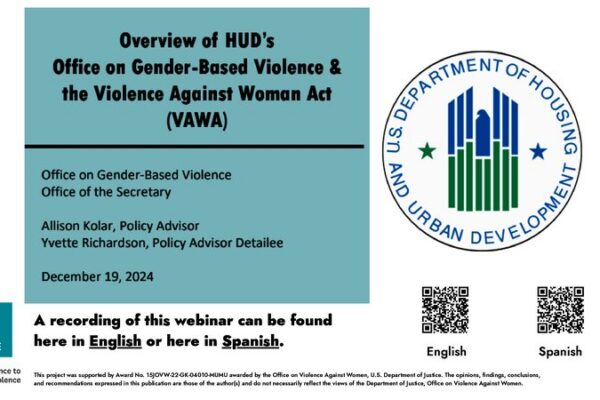
All About HUD: An Overview of HUD with and Emphasis on Supporting Survivors of Sexual Assault
HUD’s Office on Gender-Based Violence is joining with the National Sexual Assault Housing Collaborative, coordinated by the National Alliance to End Sexual Violence, to provide a high-level overview on HUD’s offices and housing programs with an emphasis on supporting the housing needs of survivors of sexual assault. Participants will also have the opportunity to learn about the VAWA housing protections for survivors of sexual assault, domestic violence, dating violence, and stalking. This is a webinar recording.
Ladies Empowered with Resources
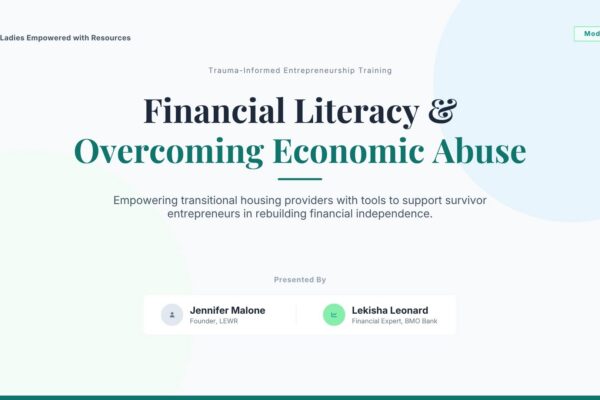
Module 4: Financial Literacy & Overcoming Economic Abuse
Module 4: Financial Literacy & Overcoming Economic Abuse Video Presentation
Module 4 of the Empowering Survivor Entrepreneurs initiative developed by Ladies Empowered with Resources focuses on financial literacy, economic empowerment, and understanding the long-term impact of economic abuse within entrepreneurship and financial recovery journeys.
This training helps providers, advocates, coaches, and support professionals recognize how trauma and economic abuse may influence financial decision-making, budgeting, saving, credit challenges, business investment fears, financial anxiety, scarcity thinking, risk avoidance, and long-term planning.
Participants explore how survivors may experience barriers to entrepreneurship due to financial instability, debt, damaged credit, limited access to resources, or past experiences involving financial control and manipulation. The module introduces trauma-informed financial empowerment strategies that prioritize emotional safety, practical support, flexibility, survivor autonomy, and sustainable economic growth.
Topics include budgeting, financial boundaries, rebuilding confidence around money, identifying economic abuse patterns, understanding trauma-related financial behaviors, resource mapping, business financial planning, and creating supportive financial empowerment environments for survivors.
Through practical examples, case studies, reflective activities, worksheets, and implementation tools, participants gain strategies for supporting survivors in rebuilding financial stability while pursuing entrepreneurship and long-term economic empowerment.
This training is designed for transitional housing providers, victim service organizations, entrepreneurship coaches, workforce development professionals, social service agencies, faith-based organizations, financial empowerment programs, advocates, case managers, and multidisciplinary professionals supporting survivors of domestic violence, sexual assault, dating violence, stalking, human trafficking, economic abuse, and other traumatic experiences.
Materials may be used for educational and implementation support purposes.
Ladies Empowered with Resources
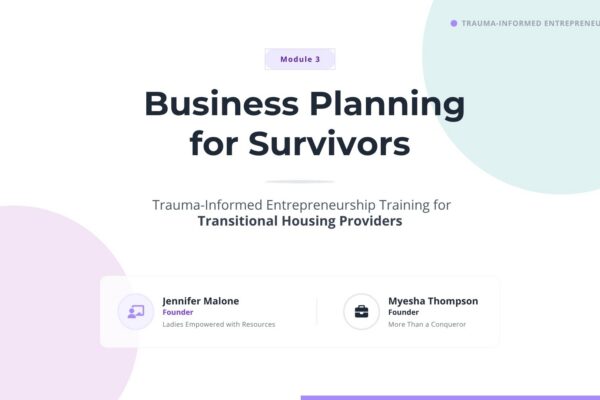
Module 3: Business Planning for Survivors
Module 3: Business Planning for Survivors Video Presentation
Module 3 of the Empowering Survivor Entrepreneurs initiative developed by Ladies Empowered with Resources focuses on trauma-informed business planning strategies for survivors exploring entrepreneurship and economic empowerment.
This training helps providers, advocates, coaches, and support professionals understand how trauma may influence planning, decision-making, risk assessment, confidence, consistency, organization, future visioning, and goal development within entrepreneurship settings.
Participants explore how traditional business planning models may unintentionally overwhelm or discourage survivors when emotional safety, flexibility, and lived experiences are not considered. The module introduces survivor-centered approaches that help individuals move from survival-based thinking toward sustainable planning, ownership, and long-term empowerment.
Topics include goal setting, business vision development, identifying strengths and barriers, pacing entrepreneurship growth, adapting business plans during periods of instability, financial considerations, resource mapping, and creating supportive entrepreneurship environments.
Through practical examples, case studies, reflective exercises, worksheets, and implementation tools, participants learn how to guide survivors through business planning in ways that support confidence, emotional regulation, self-determination, and sustainable business development.
This training is designed for transitional housing providers, victim service organizations, entrepreneurship coaches, workforce development professionals, community advocates, faith-based organizations, case managers, social service agencies, and multidisciplinary professionals supporting survivors of domestic violence, sexual assault, dating violence, stalking, human trafficking, economic abuse, and other traumatic experiences.
Materials may be used for educational and implementation support purposes.