
Recently Added
Stalking Prevention, Awareness, and Resource Center (SPARC)
Responding to Military-Connected Survivors of Stalking
Stalking Prevention, Awareness, and Resource Center (SPARC)
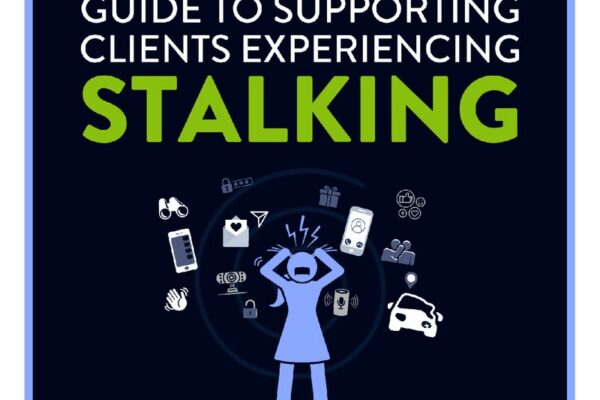
Mental Health Professionals’ Guide to Supporting Clients Experiencing Stalking
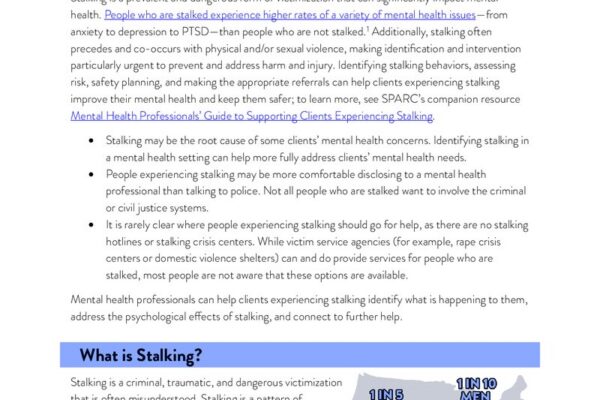
Stalking Prevention, Awareness, and Resource Center (SPARC)
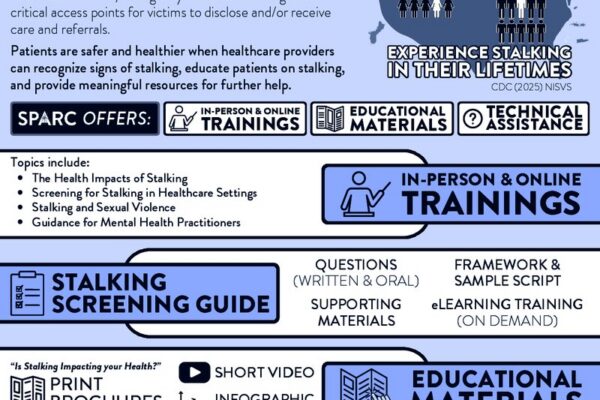
Listening for Stalking in Mental Health Settings
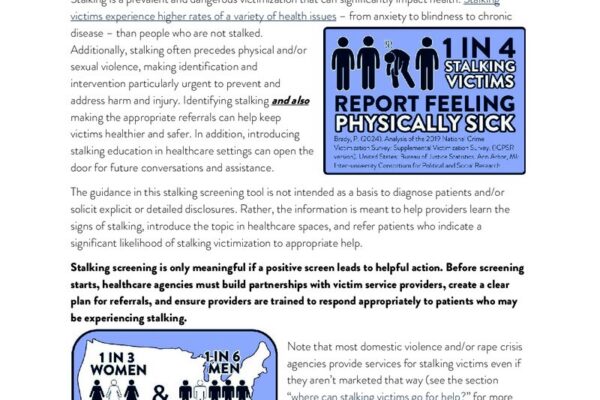
Stalking Prevention, Awareness, and Resource Center (SPARC)
Guide to Screening for Stalking in Healthcare Settings
Stalking Prevention, Awareness, and Resource Center (SPARC)
Understanding the Counterman v. Colorado Supreme Court Decision
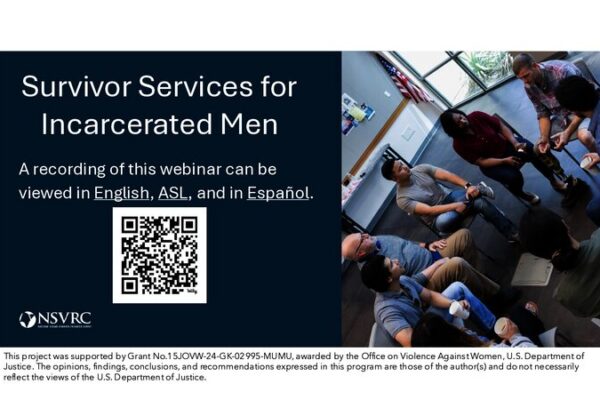
Survivor Services for Incarcerated Men
This recorded presentation provides an understanding of the dynamics of sexual abuse that men experience behind bars, and insights into how advocates can become more comfortable working with this population. Advocates will learn strategies for adapting their support services and advocacy skills to meet the needs of men and incarcerated survivors. This training highlights the critical role advocates can play in ensuring access to healing services for men.
NSVRC: Working with Male Survivors of Sexual Violence
https://www.nsvrc.org/working-male-survivors-sexual-violence
JDI: Service Provider Resources https://justdetention.org/service_provider_categories/getting-started/
Alliance for HOPE International
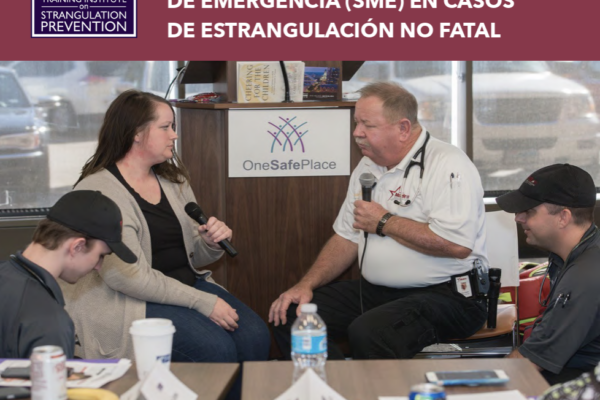
“Do You Need a Paramedic?” (Spanish) El Papel De Los Servicios Médicos De Emergencia (Sme) En Casos De Estrangulación No Fatal
The Training Institute on Strangulation Prevention translated “Do You Need a Paramedic?” The Role of Emergency Medical Services in Non-Fatal Strangulation Cases into Spanish! Check it out.

Alliance for HOPE International
The Advocacy Toolkit for Survivors of Strangulation/Suffocation
The Advocacy Toolkit is designed to provide comprehensive support and resources for those who have experienced non-fatal strangulation or suffocation. Recognizing the unique challenges in identifying and addressing this serious form of violence, our toolkit offers valuable information, practical tips, and essential resources.
These resources are intended to be used by professionals in multi-disciplinary teams offering services for survivors, including healthcare providers, law enforcement, social workers, and legal advocates. By equipping professionals with the knowledge and tools necessary to identify and respond to non-fatal strangulation, we can improve outcomes and provide better support for survivors.
Ladies Empowered with Resources
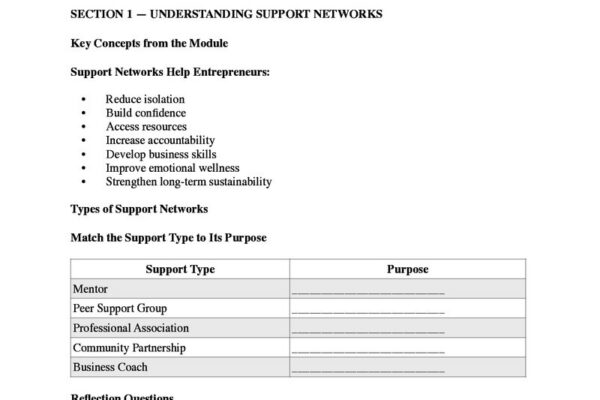
Module 7 Building a Support Network & Business Sustainability
Module 7 Building a Support Network & Business Sustainability Video Presentation
This module equips transitional housing providers with approaches to help survivor entrepreneurs build supportive networks and strengthen long-term business sustainability. Participants will explore connections with mentors, peers, community partners, and professional business resources. The module emphasizes developing relationships and ongoing support systems that reduce isolation, expand access to opportunities, and help survivor-owned businesses achieve sustainable success.
Ladies Empowered with Resources
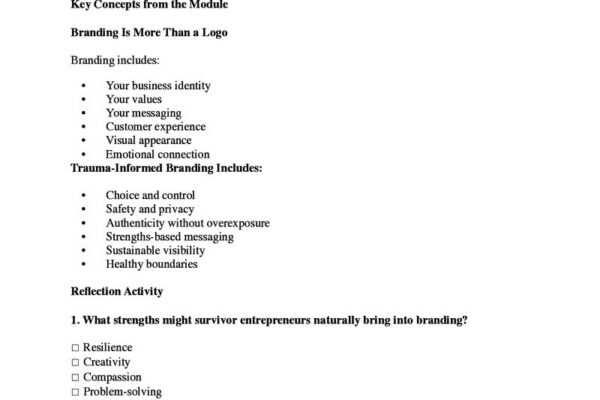
Module 6: Marketing & Branding Through a Trauma Informed Lens
This module equips transitional housing providers with trauma-informed approaches to help survivor entrepreneurs market and brand their businesses. Participants will explore branding that aligns with survivor strengths and values, digital marketing strategies that maintain privacy and safety, sustainable social media approaches, authentic business storytelling that honors personal boundaries, and the development of a marketing ecosystem that supports business growth while respecting healing. The module emphasizes empowering entrepreneurs to share their value while maintaining control of their narratives, visibility, and boundaries.
Ladies Empowered with Resources
Module 5 Legal & Structural Considerations for Survivor Businesses
Module 5: Legal & Structural Considerations for Survivor Businesses Video Presentation
This module equips transitional housing providers with knowledge and resources to help survivor entrepreneurs navigate legal and structural business decisions. Participants will explore business structures and their implications, legal protections for survivor-owned businesses, contracts and intellectual property, safety and privacy concerns in business registration, and partnerships with trauma-informed legal resources. The module emphasizes informed decision-making that balances business viability, personal security, and emotional well-being.
National Network to End Domestic Violence
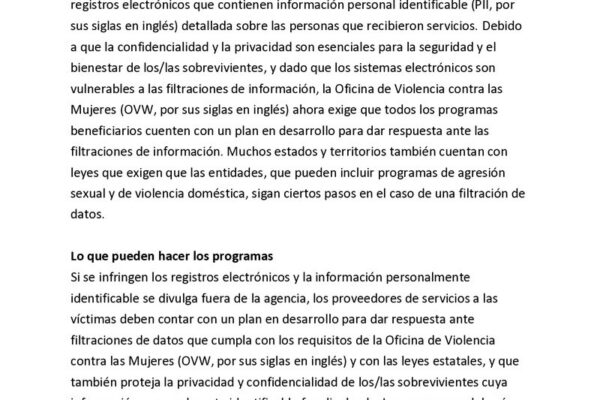
Proveedores de Servicios a las Víctimas y Filtraciones de Datos: Consideraciones para el Desarrollo de Políticas Efectivas
Si se infringen los registros electrónicos y la información personalmente identificable se divulga fuera de la agencia, los proveedores de servicios a las víctimas deben contar con un plan en desarrollo para dar respuesta ante filtraciones de datos que cumpla con los requisitos de la Oficina de Violencia contra las Mujeres (OVW, por sus siglas en inglés) y con las leyes estatales, y que también proteja la privacidad y confidencialidad de los/las sobrevivientes cuya información personalmente identificable fue divulgada. Los programas deberán informar a los/las sobrevivientes que su información fue divulgada a fin de que ellos/ellas puedan adoptar medidas para protegerse contra cualquier potencial consecuencia de tal divulgación. Los programas también deberán estudiar detenidamente de qué manera establecerán un contacto seguro con los/las sobrevivientes para notificarlos/as sobre la filtración de información.
National Network to End Domestic Violence
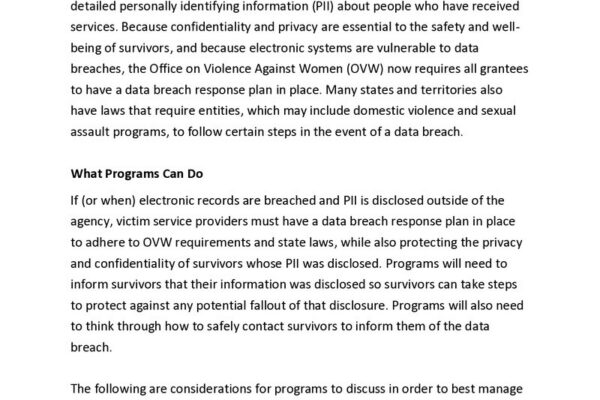
Data Breaches & Victim Service Providers: Considerations for Developing Effective Policies
Many victim service providers now maintain electronic records that contain detailed personally identifying information (PII) about people who have received services. Because confidentiality and privacy are essential to the safety and well-being of survivors, and because electronic systems are vulnerable to data breaches, the Office on Violence Against Women (OVW) now requires all grantees to have a data breach response plan in place.
This resource provides considerations for programs to discuss in order to best manage data and create solid data breach policies that prioritize survivor safety and privacy.
Inspire Action for Social Change
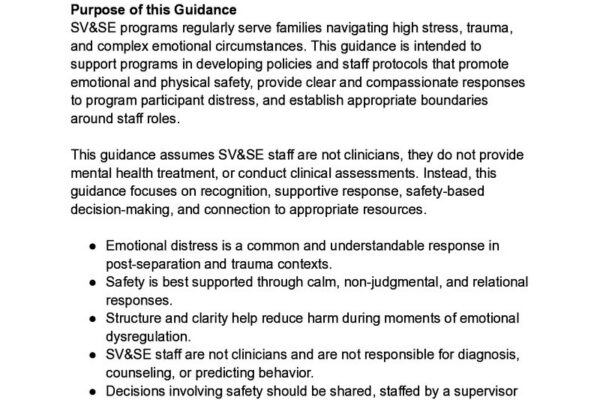
Program Guidance: Supporting Program Participants Experiencing Mental Health Distress in Supervised Visitation and Safe Exchange Programs – Including Expressions of Self-Harm or Harm to Others
This guidance helps SV&SE staff recognize and respond to participants’ mental health distress (including self-harm or harm-to-others disclosures) with calm, non-clinical, safety-centered support grounded in domestic violence dynamics. It covers supportive response, duty-to-protect disclosure, documentation, and confidentiality practices, with responses tailored based on whether the survivor or the person who caused harm is the one in distress.
Police Executive Research Forum
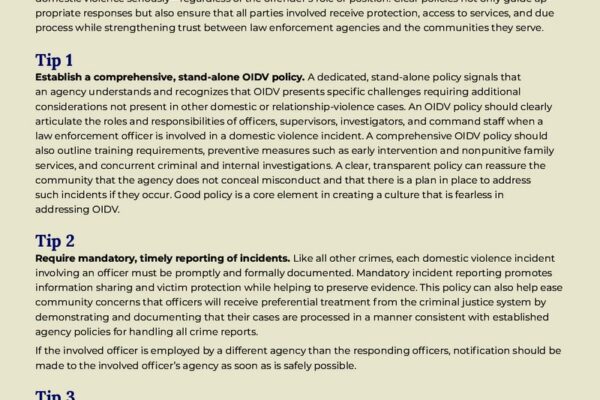
Tip Sheet: Ensuring Accountability in Officer-Involved Domestic Violence
Creating legitimacy and ensuring public trust begin with holding our own professionals accountable and enforcing clear policies to address officer-involved domestic violence (OIDV). Strong policies demonstrate an agency’s commitment to taking domestic violence seriously—regardless of the offender’s role or position. Clear policies not only guide appropriate
responses but also ensure that all parties involved receive protection, access to services, and due process while strengthening trust between law enforcement agencies and the communities they serve.
This tip sheet highlights key considerations for preparing for and responding to OIDV incidents.