
Recently Added
Ladies Empowered with Resources
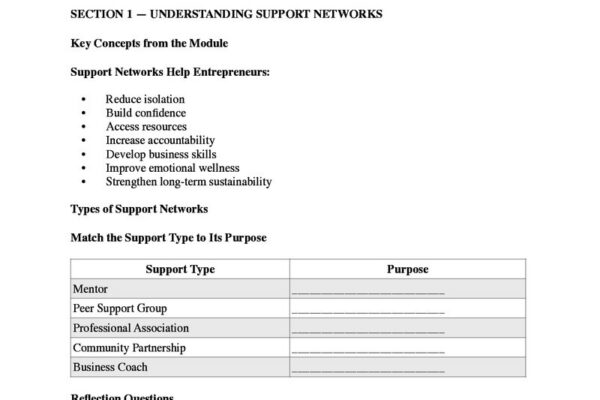
Module 7 Building a Support Network & Business Sustainability
Module 7 Building a Support Network & Business Sustainability Video Presentation This module equips… Read more
Ladies Empowered with Resources
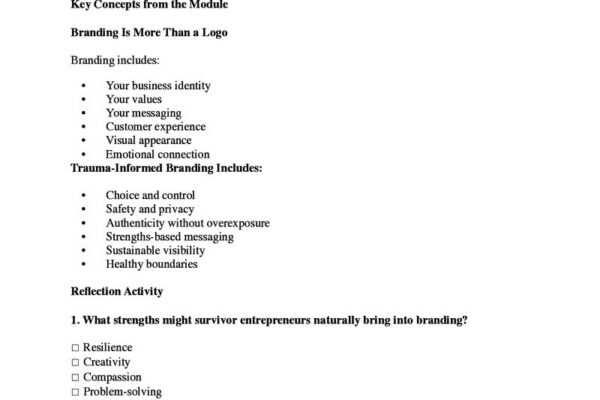
Module 6: Marketing & Branding Through a Trauma Informed Lens
Module 6 Marketing & Branding Through a Trauma Informed Lens Video Presentation This module equips… Read more

Ladies Empowered with Resources
Module 5 Legal & Structural Considerations for Survivor Businesses
Module 5: Legal & Structural Considerations for Survivor Businesses Video Presentation This module equips… Read more
National Network to End Domestic Violence
Proveedores de Servicios a las Víctimas y Filtraciones de Datos: Consideraciones para el Desarrollo de Políticas Efectivas
Si se infringen los registros electrónicos y la información personalmente identificable se divulga fuera de… Read more
National Network to End Domestic Violence
Data Breaches & Victim Service Providers: Considerations for Developing Effective Policies
Many victim service providers now maintain electronic records that contain detailed personally identifying information (PII)… Read more
Inspire Action for Social Change
Program Guidance: Supporting Program Participants Experiencing Mental Health Distress in Supervised Visitation and Safe Exchange Programs – Including Expressions of Self-Harm or Harm to Others
This guidance helps SV&SE staff recognize and respond to participants’ mental health distress (including self-harm… Read more
Police Executive Research Forum
5 Tips for Law Enforcement on Treating Victims with Respect
Law enforcement officers play a central role in ensuring that all victims feel heard, respected, and supported as they report sexual assault and domestic violence crimes. An officer’s approach during their first interactions with a victim plays a critical role in establishing trust and safety. These first moments can significantly influence whether a victim feels comfortable sharing information, engaging in the criminal justice process, and seeking help—now or in the future.
These five tips offer practical guidance for officers to build trust and improve communication with victims.
Police Executive Research Forum
5 Tips to Improve Your Domestic Violence and Sexual Assault Reports
Writing reports for domestic violence or sexual assault cases can be challenging, even for experienced officers. These incidents are complex and emotionally charged, and they often involve limited physical evidence, reluctant victims, or both. It’s important to remember that a report is only as strong as the investigation behind it. Even the best writing can’t compensate for gaps in an investigation. If you don’t thoroughly gather, document, and corroborate the facts, your report
may fall short—no matter how well you’ve written it.
These tips will not only strengthen your report writing but also enhance the quality of your investigations. They’re practical, field-tested, and rooted in the goal of supporting victims, ensuring accountability, and building cases that withstand scrutiny.
National Alliance to End Sexual Violence
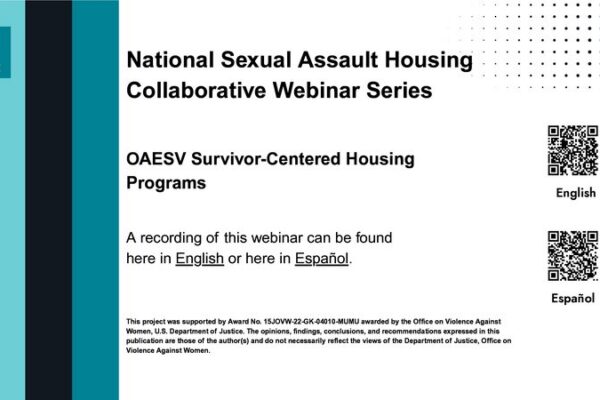
Survivor-Centered Housing Programs: An Overview of Ohio Alliance to End Sexual Violence (OAESV) Housing Programs
To better meet growing needs, advocates find themselves leaning into housing advocacy, which can be complex and time-consuming for those unfamiliar with the housing field. Given the growing frequency of housing requests coming into to sexual assault programs combined with the soaring amount of staff time spent addressing housing needs, many organizations are interested in building new or remodeling existing housing programs. So what does a survivor–centered housing program look like?
This webinar highlights the Ohio Alliance to End Sexual Violence (OAESV)’s survivor–centered approach to housing survivors of sexual assault. Use this flyer to access the webinar recording.
National Alliance to End Sexual Violence
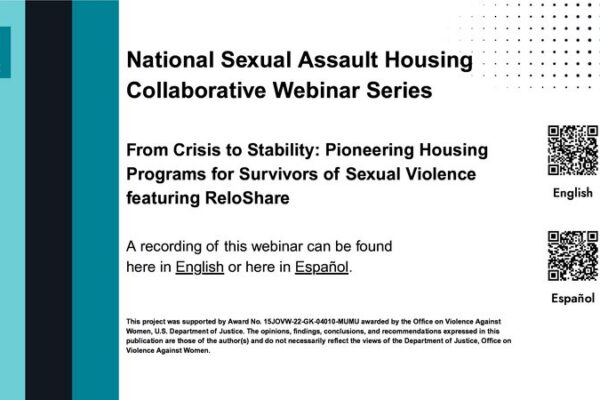
From Crisis to Stability: Pioneering Housing Programs for Survivors of Sexual Violence
The unique housing needs of survivors of sexual assault vary from one survivor to another. These needs do not always fit neatly into traditional housing paths. A survivor living in a multigenerational household may need a night or two away to clear their mind in solitude. A survivor may need to appear in court early in the morning, yet live hours away with no access to public transportation. Or a survivor may benefit from a neutral environment to process. For such scenarios, innovation is the answer.
Featuring ReloShare, this webinar will dive into the challenges survivors of sexual violence face accessing shelter, explore how a hotel shelter program model can accelerate options, and share tips on implementing such program models. Use this flyer to access the webinar recording.
National Alliance to End Sexual Violence
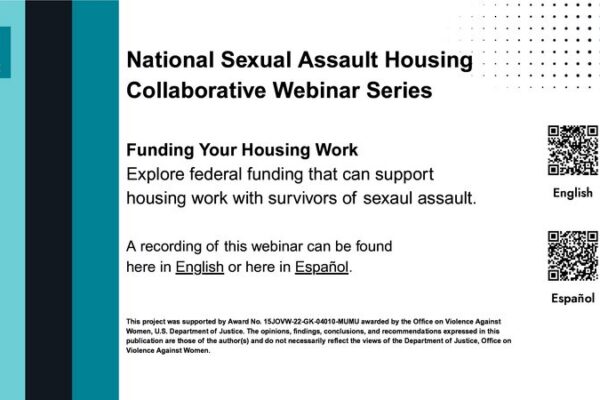
Funding Your Housing Work
Survivors of sexual assault have unique housing needs throughout their lifespan. The number of housing related advocacy requests received by sexual assault programs and coalitions is growing, and fast. Although housing is recognized as a priority issue impacting survivors, many sexual assault programs and coalitions do not have specific housing programs or dedicated housing staff to meet increased need. One of the primary barriers? Lack of funding.
This webinar introduces attendees to a variety of funding opportunities that can, and currently do, support housing work with survivors of sexual assault. Use this flyer to view the recording.
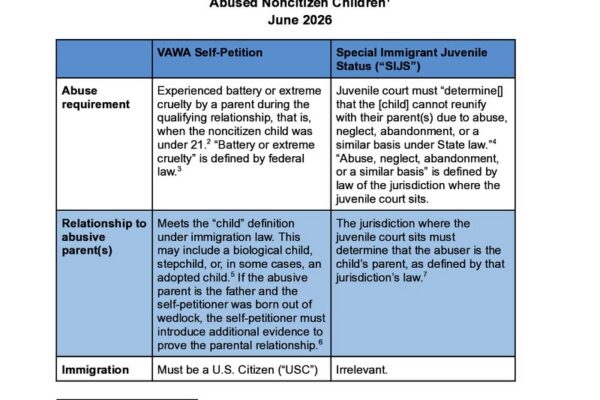
Comparing the VAWA Self-Petition and Special Immigrant Juvenile Status for Abused Noncitizen Children
This quick-reference chart compares the Violence Against Women Act (“VAWA”) Self-Petition and Special Immigrant Juvenile Status (“SIJS”) as immigration options for abused noncitizen children.
Battered Women’s Justice Project
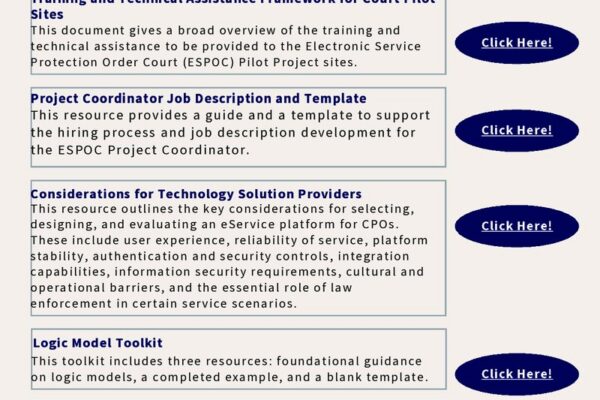
ESPOC: Resource list
This list has links to all of the resources and webinars that BWJP has created for the ESPOC project.
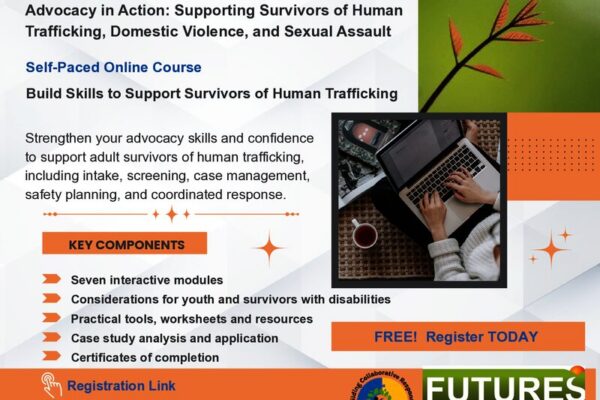
Advocacy in Action: Supporting Survivors of Human Trafficking, Domestic Violence, and Sexual Assault Self-Paced Course
This trauma-informed course strengthens advocates’ skills in supporting survivors of human trafficking who have also experienced domestic and/or sexual violence, with a focus on intake, assessment, case management, and collaborative support
Course Modules
Module 1: Overlapping Experiences of Human Trafficking, Domestic and Sexual ViolenceModule 2: Impacts of Trauma and Protective StrategiesModule 3: Foundations for Survivor Intake and Case ManagementModule 4: Screening for Human Trafficking and Identifying Survivor NeedsModule 5: Safety Planning with SurvivorsModule 6: Collaborating for Survivor Support: Confidentiality and PartnershipsModule 7: Ensuring Continuity of Care and Long-Term Support
National Network to End Domestic Violence
Conceptos básicos de cifrado para programas Atención a las personas sobrevivientes de la violencia de género
El cifrado ayuda a proteger la información del acceso indeseado o sin autorización. Las opciones de cifrado están disponibles en la mayoría de los dispositivos inteligentes y las plataformas en línea.
Siempre que sea posible, los programas de servicios para víctimas deben utilizar el cifrado para proteger los datos, las comunicaciones y los sitios web. Las personas sobrevivientes también pueden utilizarlo para ayudar a proteger sus dispositivos y comunicaciones. Este manual proporcionará una visión general de lo que es el cifrado y la manera en la que puede ser utilizado por las personas sobrevivientes y proveedores de servicios para víctimas con el objetivo de proteger información confidencial.
National Network to End Domestic Violence
Encryption Basics for Programs Serving Survivors of Gender-Based Violence Encryption
Encryption helps to protect information from unauthorized and unwanted access. Options for encryption are available on most smart devices and online platforms.
Victim Service Programs should use encryption to protect data, communications, and websites whenever possible. Survivors can also use it to help protect their devices and communications. This handout will provide an overview on what encryption is and how it can be used by survivors and victim service providers to protect sensitive communications.