
Recently Added
Attorney Safety Guide
Attorneys who work on cases involving domestic and dating violence, sexual assault, and stalking (DVSAS)… Read more

Battered Women’s Justice Project
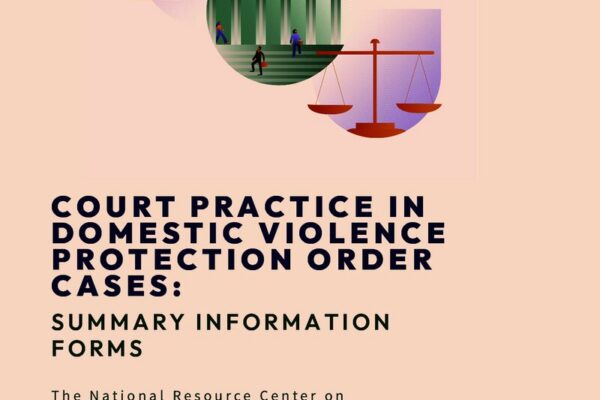
Court Practice in Domestic Violence Protection Order Cases: Creating Court Summary Information Forms
Because protection orders can be the basis by which someone is ineligible to receive a… Read more

Battered Women’s Justice Project
Court Practice in Misdemeanor Crimes of Domestic and Dating Violence Cases: Creating Court Summary Information Forms
Because misdemeanor convictions for crimes of domestic and dating violence can be the basis by… Read more
Battered Women’s Justice Project
U.S. v. Rahimi: Understanding the Implications for Protection Orders and Firearms Prohibitions
In June 2024, the U.S. Supreme Court upheld the federal law that prohibits domestic abusers… Read more
Battered Women’s Justice Project
What High Schools and Colleges Need to Know About Dating Violence and Firearms
In the United States, one in eight high school students reports having been subjected to… Read more
National Housing & Community Development Law Project
Housing Rights of Domestic Violence Survivors: A State and Local Law Compendium
This Compendium compiles state and local laws that affect domestic violence survivors’ housing rights. It is designed to serve as a starting point for advocates seeking to conduct research on the housing protections that their state and local laws offer for domestic violence survivors. Examples of such protections include early lease termination provisions for domestic violence survivors, lock change laws, and affirmative defenses for evictions related to acts of domestic violence committed against a tenant. The updated compendium includes laws enacted as of December 2017.
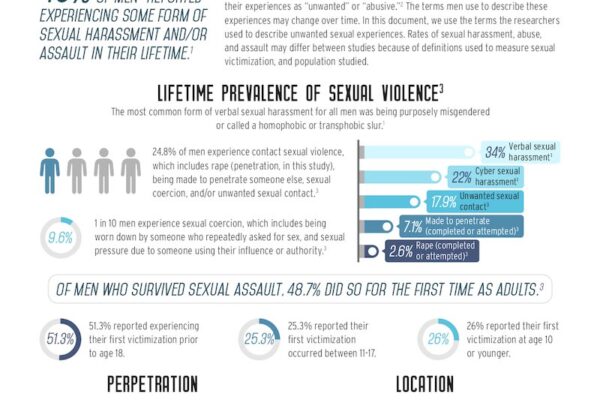
How often are men sexually harassed or assaulted
How often are men sexually assaulted or harassed? In this infographic, we provide statistics on the prevalence of sexual violence for men.

Inspire Action for Social Change
HOW TO SUPPORT CHILDREN AND YOUTH DURING REMOTE SUPERVISED VISITATION SERVICES
HOW TO SUPPORT CHILDREN AND YOUTH DURING REMOTE SUPERVISED VISITATION SERVICES

How We Talk About Working with Male Survivors of Sexual Assault, Harassment, and Abuse
How we talk about sexual violence matters. Whether you’re describing your center’s services to a friend, talking with a classroom of college students about preventing sexual harassment, or writing your agency’s newsletter, the words you use have an impact on how audiences understand those topics. They also have an impact on who sees themselves as eligible for your center’s services. Because you want to raise awareness in your community that men experience sexual violence, and let men know that your sexual assault center is here to help, make sure your language reflects these commitments. This resource suggests how you can communicate about sexual violence as something that men experience and about what services are available for survivors, including men.
International Association of Chiefs of Police
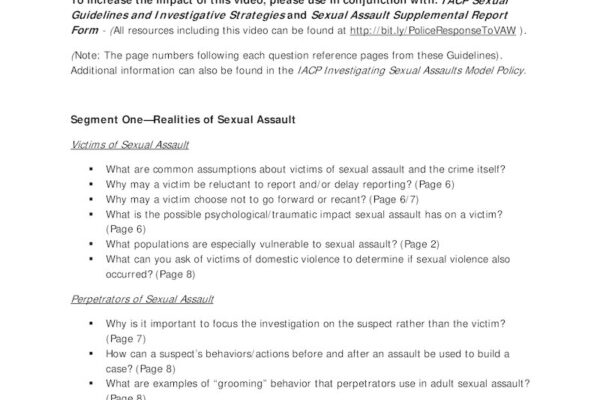
IACP Bringing Sexual Assault Offenders to Justice Roll-Call Training Video
IACP’s sexual assault roll-call training video “Bringing Sexual Assault Offenders to Justice” was developed to expand our law enforcement educational efforts on the crime of sexual assault and accompany the IACP Sexual Assault Guidelines and Supplemental Report Form. The goal of this video is to help officers generate stronger cases by reframing sexual assault crimes, providing tools to conduct perpetrator focused investigations, and building an understanding of victim behavior. “Bringing Sexual Assault Offenders to Justice” will help officers identify victim trauma and provide information about victim behavior, such as delayed reporting, alcohol or substance abuse, and encounters that start out consensually, that can be used to support a sexual assault report. This video will also provide useful information detailing how perpetrators often have a history of unreported acts of sexual violence and may select victims with vulnerabilities to exploit. A strong sexual assault training program will result in offenders being held accountable, fewer cases being dismissed, and ultimately increase successful prosecution. Links to videos: https://www.youtube.com/watch?v=0bJDi5YTd1M&feature=youtu.be https://www.youtube.com/watch?v=ojYVshH87Ac&feature=youtu.be https://www.youtube.com/watch?v=4xv4bU734uQ&feature=youtu.be

International Association of Chiefs of Police
IACP Sexual Assault Supplemental Report Form
Striving to strengthen sexual assault investigations and set national uniform standards for sexual assault case coding and documentation, the IACP created the Sexual Assault Guidelines: Supplemental Report Form and Investigative Strategies. This educational tool consists of a supplemental report form, guidelines for case documentation, effective techniques for victim and perpetrator interviews, and a pocket “tip” card for officers. This is the IACP Sexual Assault Supplemental Report. It is recommended that the Sexual Assault Supplemental Report be used in the reporting, recording and investigation of all sexual assault incidents, for each and every incident reported.
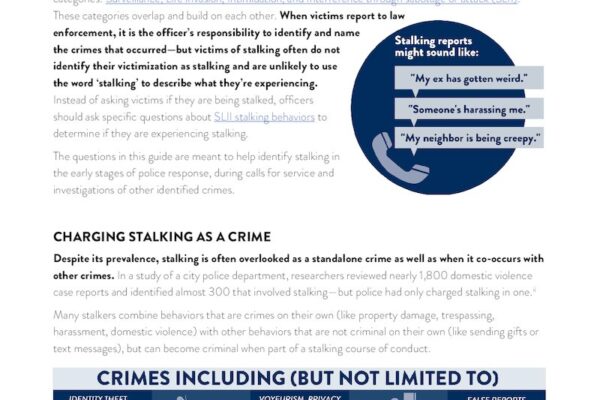
Identifying Stalking on Law Enforcement Calls for Service
The questions in this guide are meant to help identify stalking in the early stages of police response, during calls for service and investigations of other identified crimes.
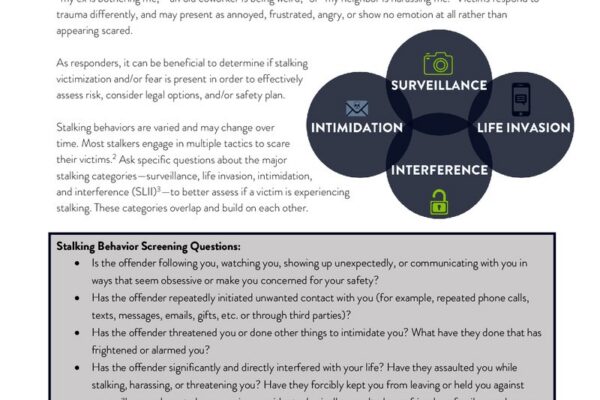
Identifying Stalking as SLII Strategies
Adapted from T.K. Logan’s “Connecting the Dots: Advocates,” 2017. A handout covering the major stalking categories – surveillance, life invasion, intimidation, and interference through sabotage or attack (SLII).

Immigration Court Toolkit for Advocates for Survivors of Domestic and Sexual Violence
This toolkit is designed to help immigration attorneys and non-attorney advocates for survivors of domestic and sexual violence (“advocates” ) better serve immigrant survivors2 of violence who have matters in Immigration Court.3 Immigration Courts do not appoint lawyers for those who cannot afford it; instead, survivors often have to appear without legal support. It is extremely difficult for someone without counsel to win a case in immigration court; the result of losing is deportation. It is, therefore, vital that attorneys and advocates working with survivors learn about this complicated system and help survivors navigate it. Moreover, most immigration lawyers do not work with the special routes to status Congress designed for immigrant survivors and rarely have the kind of knowledge and experience required to work effectively with survivors of domestic and sexual assault.. For all these reasons, we encourage and thank you for helping us build more holistic legal resources for immigrant survivors who face deportation
National Council of Juvenile and Family Court Judges
Improving Safety and Privacy in Civil Protection Order Cases: In Person and Virtual Court Considerations
Many litigants seek court-ordered safety measures to prevent and mitigate violence and abuse in their lives. While courts implement general safety measures during the COVID-19 pandemic to address public health concerns, special considerations may be needed to ensure safety and privacy for litigants in abuse cases. This resource looks at the unique safety concerns that may arise in cases involving domestic and sexual violence and stalking.