
Recently Added
Attorney Safety Guide
Attorneys who work on cases involving domestic and dating violence, sexual assault, and stalking (DVSAS)… Read more
Battered Women’s Justice Project
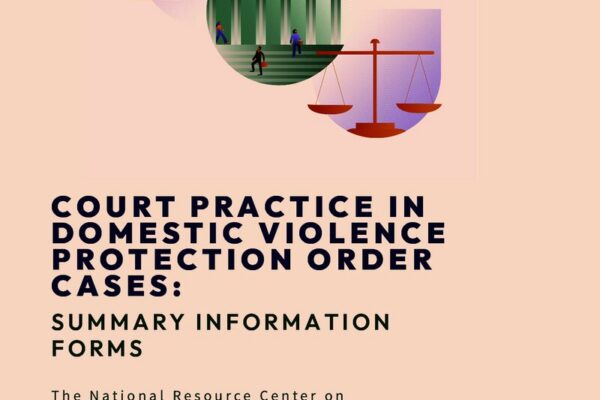
Court Practice in Domestic Violence Protection Order Cases: Creating Court Summary Information Forms
Because protection orders can be the basis by which someone is ineligible to receive a… Read more

Battered Women’s Justice Project
Court Practice in Misdemeanor Crimes of Domestic and Dating Violence Cases: Creating Court Summary Information Forms
Because misdemeanor convictions for crimes of domestic and dating violence can be the basis by… Read more
Battered Women’s Justice Project
U.S. v. Rahimi: Understanding the Implications for Protection Orders and Firearms Prohibitions
In June 2024, the U.S. Supreme Court upheld the federal law that prohibits domestic abusers… Read more

Battered Women’s Justice Project
What High Schools and Colleges Need to Know About Dating Violence and Firearms
In the United States, one in eight high school students reports having been subjected to… Read more
Tribal Law and Policy Institute
Jury Composition
The Indian Civil Rights Act (ICRA) requires that no tribe shall “deny to any person accused of an offense punishable by imprisonment the right, upon request, to a trial by jury of not less than six persons.” 1 In addition, the Special Domestic Violence Criminal Jurisdiction (SDVCJ) of the 2013 Violence Against Women Act (VAWA) requires “an impartial jury that is drawn from sources that reflect a fair cross-section of the community; and do not systematically exclude any distinctive group in the community, including non-Indians.” 2 This requirement exists in cases where imprisonment of any length of time is possible.

Justice for Families Technical Assistance Bulletin – Center for Court Innovation – Fall 2020
The Center for Court Innovation’s Technical Assistance Bulletin is a newsletter organized around various subjects that are of interest to Justice for Families grantees. This issue includes helpful resources for planning around COVID-19. This newsletter also covers children and intimate partner violence, the SAFeR method of custody decision-making, and the Fathering After Violence program.

Justice for Families Technical Assistance Bulletin – Center for Court Innovation – Fall 2021
The Center for Court Innovation’s Technical Assistance Bulletin is a newsletter organized around various subjects that are of interest to Justice for Families grantees. In this issue, you’ll learn about a survivor-centered program from Seattle, Washington, the newest crop of OVW Domestic Violence Mentor Courts, and our team’s latest projects.
Justice for Families Technical Assistance Bulletin – Center for Court Innovation – Spring 2020
The Center for Court Innovation’s Technical Assistance Bulletin is a newsletter organized around various subjects that are of interest to Justice for Families grantees. Justice for Families grantee teams work hard to set and achieve project goals to improve court and community responses to domestic violence. In this issue, you’ll read about the many forms of training and technical assistance available from our team, including an overview of all the ways this assistance can be provided. You’ll also read about our partner technical assistance organizations, and the experiences of a few grantee sites and how training and technical assistance has worked for them.
Justice for Families Technical Assistance Bulletin – Center for Court Innovation – Spring 2022
The Center for Court Innovation’s Technical Assistance Bulletin is a newsletter organized around various subjects that are of interest to Justice for Families grantees. In this edition of the newsletter, we explore the impact of technology on domestic violence cases. You will read about the National Network to End Domestic Violence’s excellent survivor safety network, as well as Tulsa County District Court’s robust hybrid domestic violence compliance docket. You’ll also see news about the Center’s Domestic Violence Resource for Increasing Safety and Connection (DV RISC) project, as well as our team’s latest publications.
Keeping Doors Open: Domestic Violence and COVID-19
An article in pre-publication for the June/July 2020 issue of the Domestic Violence Report, published by the Civic Research Institute.

Kidsta.org Information Sheet
Kidsta.org is a technical assistance project from the IAFN and the Office on Violence Against Women to provide support, resources, and training on the recommendations in the National Protocol for Sexual Abuse Medical Forensic Examinations: Pediatric.

Law Enforcement Tips: Identifying SLII Stalking Behaviors
A guide for law enforcement officers detailing a wide range of threatening and disturbing behaviors that can be classified as stalking in four categories: Surveillance, Life invasion, Intimidation, and Interference through sabotage or attack (SLII). These categories overlap and build on each other.
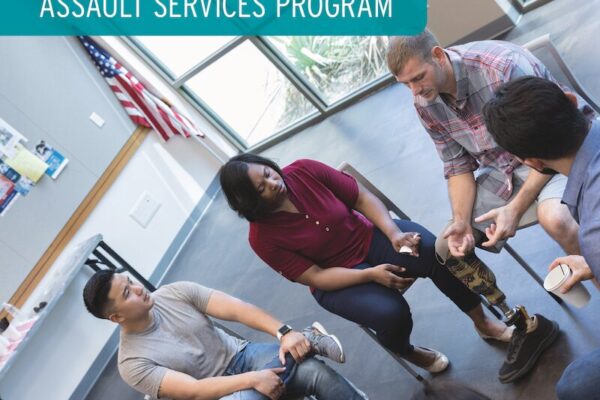
Lessons on Serving Male Survivors Through Sexual Assault Services Program
A resource containing lessons learned from sexual assault services programs with comparatively high percentages of male survivors served with that funding stream.
LGBTQ Issues in Teen Dating Violence
Legal Momentum’s National Judicial Education Program has created a set of educational materials for judges, courts, court-related professionals, schools, parents, teens, and the community to learn about the dangers and consequences of Teen Dating Violence. These Information and Resources sheets were developed by the National Judicial Education Program (NJEP) with funding from the Department of Justice Office on Violence Against Women. “Teen Dating Violence” (TDV) is a scourge that is as epidemic, harmful, and potentially lethal as adult domestic violence. Unchecked TDV can entrench a lifetime pattern of perpetration by abusers and acceptance of abuse by victims. LGBTQ Issues in Teen Dating Violence is an information sheet explaining the problems faced by LGBTQ victims of TDV that are specific to their LGBTQ identities. The information sheet also makes clear that LGBTQ teens face TDV/intimate partner violence at the same rates as heterosexual teens, and it discusses the complexities in LGBTQ teens’ lives which may lead them to not report instances of TDV.