
Recently Added
Attorney Safety Guide
Attorneys who work on cases involving domestic and dating violence, sexual assault, and stalking (DVSAS)… Read more
Battered Women’s Justice Project
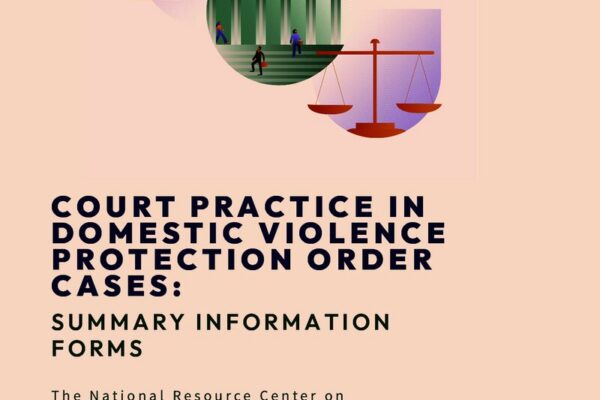
Court Practice in Domestic Violence Protection Order Cases: Creating Court Summary Information Forms
Because protection orders can be the basis by which someone is ineligible to receive a… Read more

Battered Women’s Justice Project
Court Practice in Misdemeanor Crimes of Domestic and Dating Violence Cases: Creating Court Summary Information Forms
Because misdemeanor convictions for crimes of domestic and dating violence can be the basis by… Read more
Battered Women’s Justice Project
U.S. v. Rahimi: Understanding the Implications for Protection Orders and Firearms Prohibitions
In June 2024, the U.S. Supreme Court upheld the federal law that prohibits domestic abusers… Read more

Battered Women’s Justice Project
What High Schools and Colleges Need to Know About Dating Violence and Firearms
In the United States, one in eight high school students reports having been subjected to… Read more
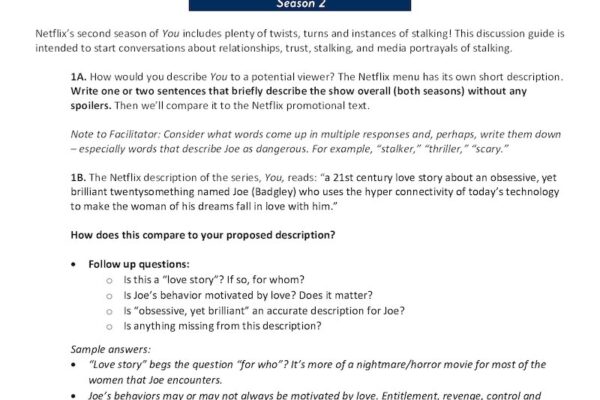
Discussion Guide: “YOU” Season 2
A guide outlining potential discussion questions and activities on the second season of the Netflix television show “You”.

Sexual Violence Justice Institute at the Minnesota Coalition Against Sexual Assault
LGBTQ Readiness Assessment
This resource is a tool for Sexual Assault Response Teams to utilize as a team to identify areas where there may be gaps or areas for improvement regarding inclusion of the LGBTQIA+ community.
10 Action Steps: Building and Sustaining Collaborations to Support Trafficking Survivors of Domestic Violence and Sexual Assault
Strategies and tools for DV/SA/HT organizations to build or enhance multidisciplinary teams to better support survivors of human trafficking.
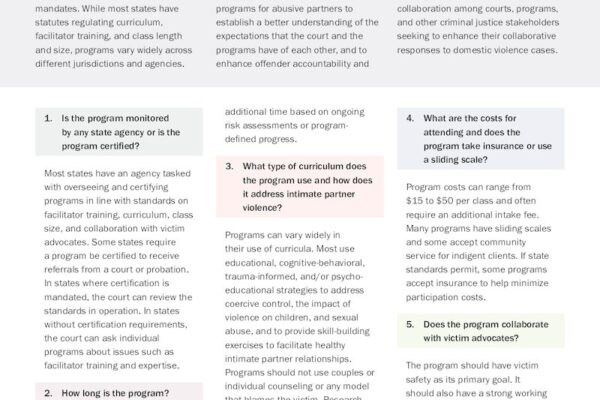
10 Things Courts Should Know About Their Local Intervention Programs for Abusive Partners
This two-page handout is designed for courts that include programming for abusive partners in their case dispositions. It lists the 10 most important questions court staff should ask as they consider making referrals and provides general information on national best practices.

Tribal Law and Policy Institute
2020 Comprehensive Training and Technical Assistance: Tribal Jurisdiction Program
Discussion of the 2020 Tribal Jurisdiction Program

Tribal Law and Policy Institute
2021 Comprehensive Training and Technical Assistance: Tribal Jurisdiction Program
Discussion on the 2021 Tribal Jurisdiction Program

National Clearinghouse on Abuse in Later Life (NCALL)
2022 Virtual Training Series for Prosecutors
In September 2022, the National Clearinghouse on Abuse in Later Life (NCALL), under a grant from the U.S. Department of Justice Office on Violence Against Women, offered a weekly series of four virtual training opportunities for prosecutors. Recordings are now available for this series.

A Domestic Violence Court Planning Road Map: The Tulalip Tribes Experience
Creating a specialized domestic violence court can be daunting for any community. It requires careful planning, leadership, and the buy-in of partners. The Tulalip Tribes of Washington are tackling the issue of domestic violence head-on, spearheading an initiative to create a specialized court, one of the first in a tribal justice system. This outline of their planning process highlights the steps involved and serves as a useful guide for tribes seeking to strengthen their court’s response to domestic violence.
National Council of Juvenile and Family Court Judges
A Judicial Guide to Child Safety in Custody Cases
Because custody cases involving abuse have intermingled issues of safety and access, judges require effective and accessible information and tools to aid their decision-making. The Judicial Guide contains 14 bench cards, which provide an easy-to-use checklist system for judges at critical decision-making points throughout the case, as well as a supplemental guide, which provides additional information about in- and out-of-court behaviors, best interest of the child, and order issuance and enforcement.

Sexual Violence Justice Institute at the Minnesota Coalition Against Sexual Assault
A Ten-Factor Framework for Sexual Assault Response Team Effectiveness
Systems-change sexual assault response teams (SARTs) are community-based multidisciplinary teams (MDTs) that work to create long-term improvements to local systems of response to sexual violence. This report outlines a framework for SART effectiveness that can help teams and STOP administrators facilitate the success of systems-change SARTs. The report details ten factors of successful SARTs, including six internal team characteristics and four external supports. Additionally, the report contains recommendations for STOP administrators to use this framework to support systems-change SARTs in their state.