
Recently Added
Stalking Prevention, Awareness, and Resource Center (SPARC)
Responding to Military-Connected Survivors of Stalking
Stalking Prevention, Awareness, and Resource Center (SPARC)
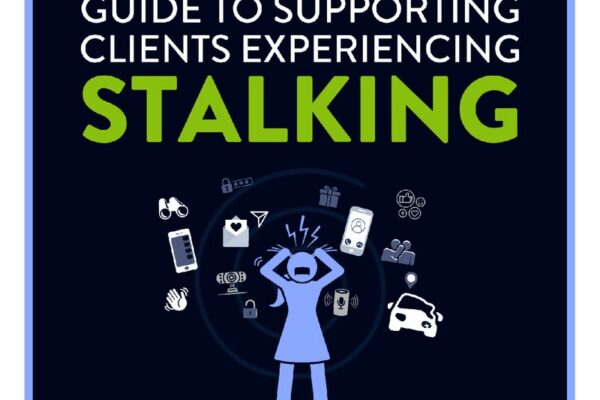
Mental Health Professionals’ Guide to Supporting Clients Experiencing Stalking
Stalking Prevention, Awareness, and Resource Center (SPARC)
Listening for Stalking in Mental Health Settings
Stalking Prevention, Awareness, and Resource Center (SPARC)
Guide to Screening for Stalking in Healthcare Settings
Stalking Prevention, Awareness, and Resource Center (SPARC)
Understanding the Counterman v. Colorado Supreme Court Decision
National Network to End Domestic Violence
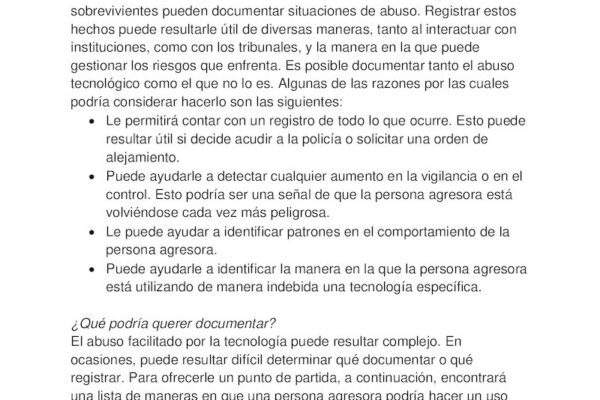
Documentation Tips for Survivors
National Network to End Domestic Violence
Documentation Tips for Survivors Spanish
Office on Violence Against Women
FY24 Rural Program Booklet
Stalking Prevention, Awareness, and Resource Center (SPARC)
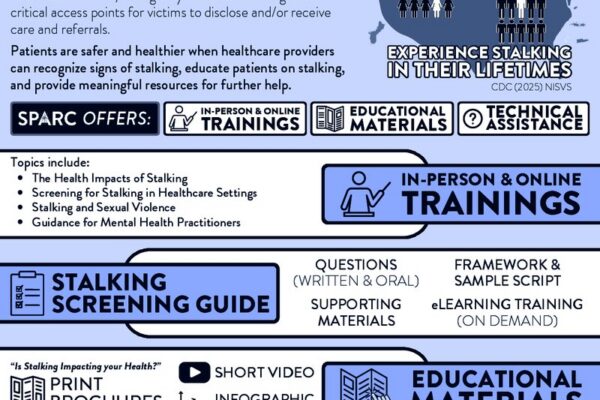
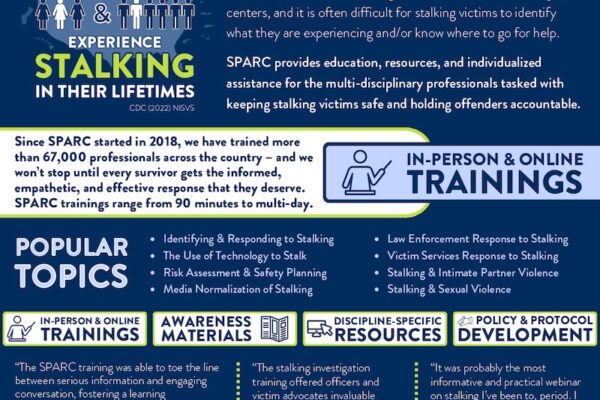
TTA Flyer: SPARC
A flyer explaining the types of training and technical assistance SPARC offers
National Council of Juvenile and Family Court Judges
Civil Protection Orders: A Guide for Improving Practice
This publication is known as the CPO Guide and is an updated version of the publication: A Guide for Effective Issuance & Enforcement of Protection Orders, also known as the Burgundy Book. The National Council of Juvenile and Family Court Judges, in partnership with the Department of Justice, Office on Violence Against Women developed the CPO Guide as a tool designed to support the work of professionals dedicated to enhancing the effectiveness of the civil protection order process. It provides guidance for advocates, attorneys, judges, law enforcement personnel, and prosecutors to help ensure that protection orders are effectively issued, served, and enforced across the country.
National Council of Juvenile and Family Court Judges
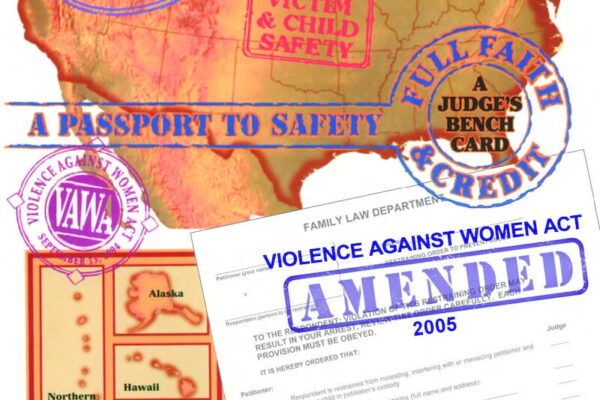
Full Faith and Credit: A Passport to Safety, A Judge’s Guide
This publication is also known as Passport to Safety and is designed to facilitate the efforts of states, tribes, and territories to implement Full Faith & Credit Provisions of the Violence Against Women Act (VAWA). Since its initial printing in 1999, VAWA has been amended three times – in 2000, 2005, and 2013. This version reflects the 2005 amendments and expands Passport to Safety from its original issuing and enforcing bench cards to include two new subject-area cards: one on firearms and one on custody, visitation, and support provisions within protection orders.

National Clearinghouse on Abuse in Later Life (NCALL)
An Overview of Elder Abuse:A Growing Problem
A brief introduction to the issue of elder abuse, including recent statistics related to prevalence.

National Clearinghouse on Abuse in Later Life (NCALL)
An Overview of Abuse in Later Life
A comprehensive discussion of abuse in later life? and an explanation of why the term takes certain variables into consideration.
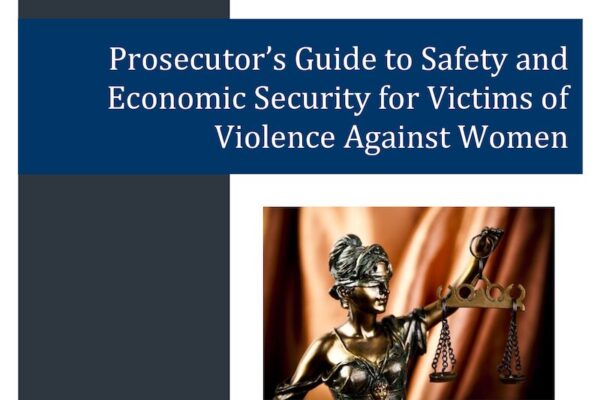
Prosecutor’s Guide to Safety and Economic Security for Victims of Violence Against Women
The Prosecutor’s Guide provides an in-depth look at how prosecution teams can help victims of domestic and dating violence, sexual assault, and stalking recover from violence and be safer in the future by addressing the linkages between abuse and economic security. It includes checklists with specific actions that prosecution staff can take to address economic security, training guidelines for prosecutors, policy recommendations and a pocket guide to accompany trial notebooks.
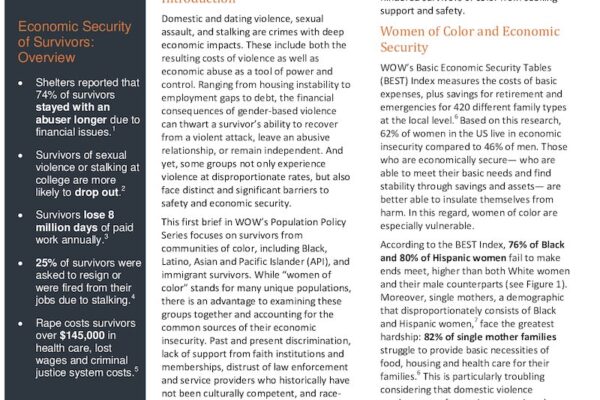
Survivors of Color and Economic Security
Part of the Population Policy Series, this brief examines the barriers that these survivors face in building economic security, escaping or recovering from abuse, and seeking support and justice. The series offers concrete strategies and solutions that direct service providers, coalitions, STOP administrators and policy makers can implement to better support the safety and economic security of these underserved groups.