
Recently Added
Conducting Legal Intakes with LGBTQ+ Survivors
Attorneys for survivors of domestic violence, dating violence, sexual assault, and stalking can develop trust… Read more
Stalking Prevention, Awareness, and Resource Center (SPARC)
Responding to Military-Connected Survivors of Stalking
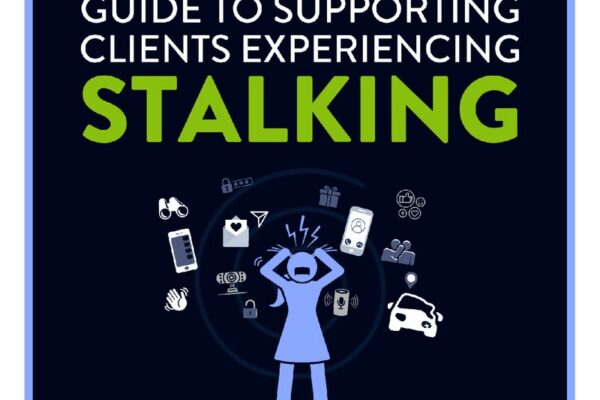
Stalking Prevention, Awareness, and Resource Center (SPARC)
Mental Health Professionals’ Guide to Supporting Clients Experiencing Stalking
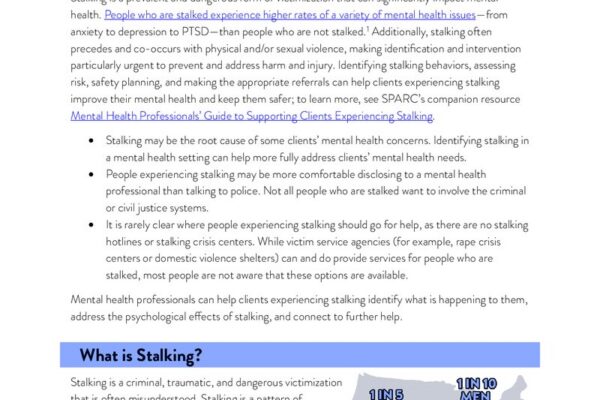
Stalking Prevention, Awareness, and Resource Center (SPARC)
Listening for Stalking in Mental Health Settings
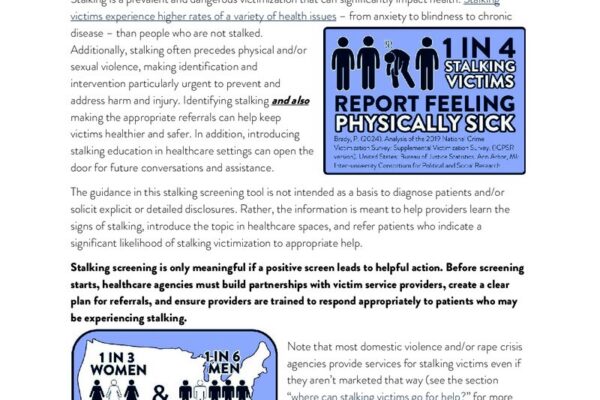
Stalking Prevention, Awareness, and Resource Center (SPARC)
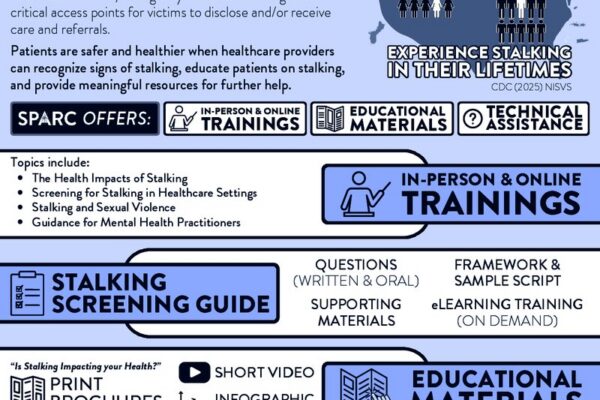
Guide to Screening for Stalking in Healthcare Settings
National Clearinghouse on Abuse in Later Life (NCALL)
World Elder Abuse Awareness Day Action Guide
The National Center on Elder Abuse (NCEA) and the National Clearinghouse on Abuse in Later Life (NCALL) collaborated to create this action guide. It includes ideas for ways to commemorate WEAAD, both in-person and virtually, offers considerations for increasing accessibility in your events, and provides tools for your WEAAD outreach.

National Council of Juvenile and Family Court Judges
Civil Protection Orders Guide: Issues in Focus
Private: Native Alliance Against Violence
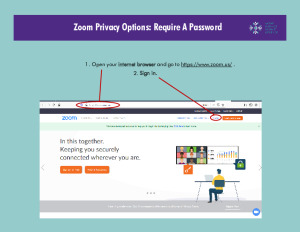
Zoom Privacy Settings Tutorial
The attached Zoom privacy tutorial provides information on: ?? How to set and require a password for meetings. How to create a waiting room to control which attendees can enter meetings.

Office on Violence Against Women
Youth Leadership
Standing up and taking action for something you believe in isn’ t always the easiest thing to do. Starting any new initiative may seem scary, overwhelming, frustrating, and confusing. However, developing a plan and taking the initial steps to make a difference in your community is absolutely doable, and can be fairly easy with the right support and resources. Dating abuse, domestic violence, and sexual assault can affect all kinds of relationships: friendships, families, and romantic partnerships. Prevention is all about trying to stop violence before it even begins.
National Network to End Domestic Violence
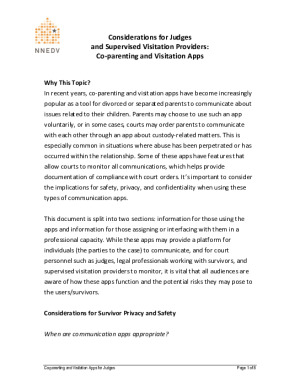
Considerations for Judges and Supervised Visitation Providers: Co-parenting and Visitation Apps
This resource discusses potential safety issues for survivors arising from coparenting and visitation apps, and how judges can use a technology safety lens as part of evaluating apps that they are considering ordering co-parents to use. In addition to this resource, please see “Co-parenting and Visitation Apps Review Checklist.”
National Network to End Domestic Violence
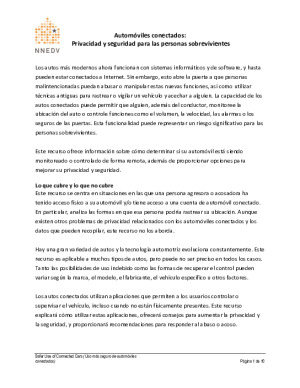
Automóviles conectados: Privacidad y seguridad para las personas sobrevivientes
Este recurso analiza las formas en que se puede hacer un mal uso de la tecnología de los automóviles conectados y describe opciones para documentar y recuperar el control.
National Network to End Domestic Violence
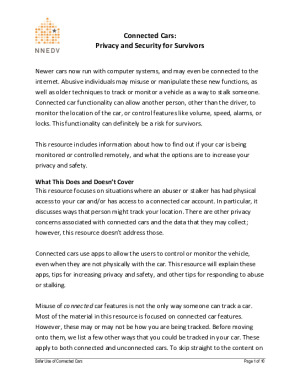
Connected Cars: Privacy and Security for Survivors
This resource discusses ways that connected car technology can be misused, and describes options for documentation and regaining control.

Stalking Awareness Toolkit
This is a comprehensive toolkit for workplaces and services providers looking to learn more about, and understand the dynamics of, stalking.
National Network to End Domestic Violence
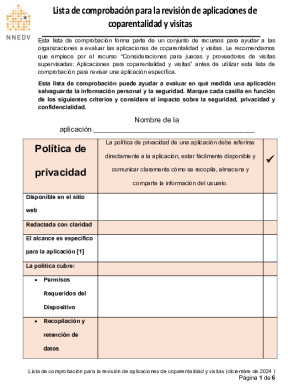
Lista de comprobación para la revisión de aplicaciones de coparentalidad y visitas
La Lista de comprobación para la revisión de aplicaciones de coparentalidad y visitas es un recurso complementario a “Consideraciones para jueces y proveedores de visitas supervisadas: Aplicaciones para coparentalidad y visitas”. Proporciona una rúbrica para ayudar a los jueces a utilizar una perspectiva de seguridad tecnológica como parte de la evaluación de las aplicaciones que están considerando ordenar a los padres compartidos que utilicen.
National Network to End Domestic Violence
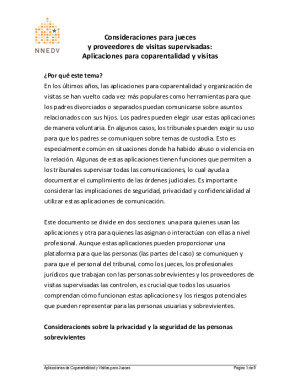
Consideraciones para jueces y proveedores de visitas supervisadas: Aplicaciones para coparentalidad y visitas
Este recurso analiza los posibles problemas de seguridad que pueden surgir para los sobrevivientes a raíz de las aplicaciones de crianza compartida y de visitas, y cómo los jueces pueden utilizar una perspectiva de seguridad tecnológica como parte de la evaluación de las aplicaciones que están considerando ordenar a los padres que utilicen. Además de este recurso, consulte la “Lista de comprobación para la revisión de aplicaciones de coparentalidad y visitas.”