
Recently Added
Conducting Legal Intakes with LGBTQ+ Survivors
Attorneys for survivors of domestic violence, dating violence, sexual assault, and stalking can develop trust… Read more
Stalking Prevention, Awareness, and Resource Center (SPARC)
Responding to Military-Connected Survivors of Stalking
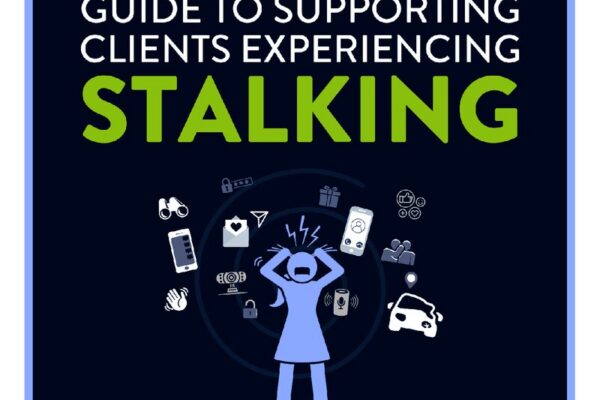
Stalking Prevention, Awareness, and Resource Center (SPARC)
Mental Health Professionals’ Guide to Supporting Clients Experiencing Stalking
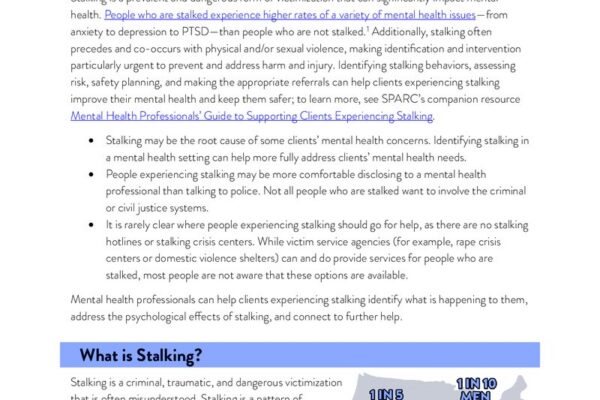
Stalking Prevention, Awareness, and Resource Center (SPARC)
Listening for Stalking in Mental Health Settings
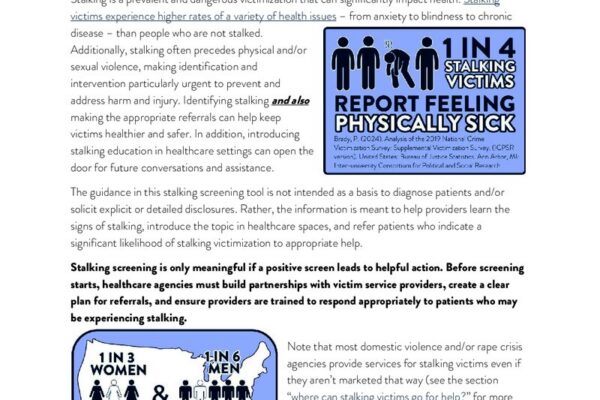
Stalking Prevention, Awareness, and Resource Center (SPARC)
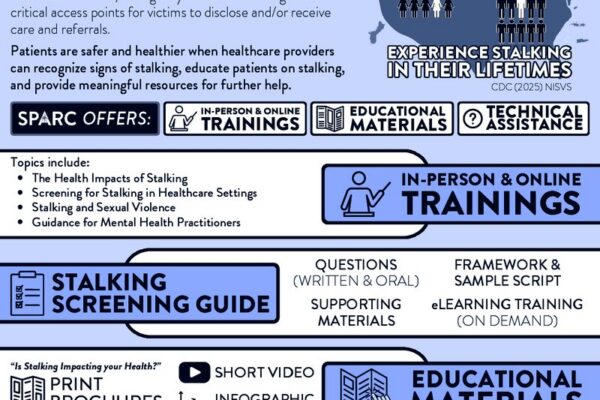
Guide to Screening for Stalking in Healthcare Settings

The Accidental Educator’s Curriculum Writing Toolkit
For any advocate new to creating educational programs, this toolkit offers a simple framework to build effective, learner-focused educational opportunities.
Inspire Action for Social Change
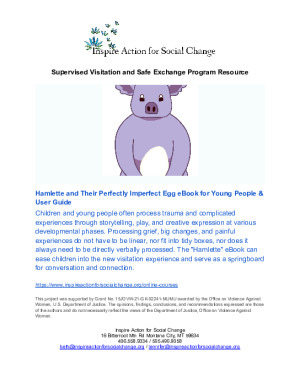
Hamlette eBook for Young People and SVSE Avatar Creator
Hamlette and Their Perfectly Imperfect Egg eBook for Young People & User GuideChildren and young people often process trauma and complicated experiences through storytelling, play, and creative expression at various developmental phases. Processing grief, big changes, and painful experiences do not have to be linear, nor fit into tidy boxes, nor does it always need to be directly verbally processed. The “Hamlette” eBook can ease children into the new visitation experience and serve as a springboard for conversation and connection. Supervised Visitation & Safe Exchange Avatar Creator for a Young Person & User Guide. This course provides an interactive platform for young people coming to a supervised visitation program to develop their own supervised visitation avatar character.
Inspire Action for Social Change
OVW JFF Supervised Visitation and Safe Exchange Site Plan Submission Guidance
This publication provides guidance to OVW JFF grantees in developing their required supervised visitation and safe exchange site plan.

Inspire Action for Social Change
Trauma-Informed Considerations for Supervised Visitation and Safe Exchange Providers eLearning Course
In the course, we will explore building environments that resist retraumatization and foster healing, well-being, and equity through policy, practice, and perspective change. Equity-centered, trauma-informed environments require us to understand how our experiences with identity, culture, community, and institutions shape our perspectives and norms. Ongoing self and team reflection in this area is foundational to understanding the diverse and multi-faceted ways that both trauma and healing show up in our own lives, in our organizations, on our teams, and for the families we serve. This training series works for individuals and teams, invites ongoing reflection to shift practice change, and encourages us to consider ourselves alongside the families we work with in supervised visitation and safe exchange services.

National Network to End Domestic Violence
Tech Talk 10: What’s Mine Is Yours: Understanding Digital Sharing and Technology Abuse
Available on TechSafety.org: https://www.techsafety.org/tech-talk-whats-mine-is-yours
In this Tech Talk, we explore how digital sharing can lead to potential tech misuse and the impact of trends like location sharing on survivors. Advocates will receive valuable tips and guidance on helping survivors enhance their privacy and safely disconnect from shared accounts. By understanding these dynamics, advocates can better support survivors in navigating the complexities of digital access while prioritizing their safety and autonomy. Thank you to David Ruiz, Senior Privacy Advocate for Malwarebytes for sharing his work and expertise with the Safety Net team.
National Network to End Domestic Violence
Safety Net Training and Technical Assistance Overview

Inspire Action for Social Change
Connecting with Families in Supervised Visitation and Safe Exchange Programming: The Practice of Meaningful Engagement and Checking-In Toolkit
Conducting orientations is the first opportunity to lay the groundwork for building trust and establishing a relationship with every person using supervised visitation and safe exchange services, but it should not be the only intentional opportunity to engage with each person. The practice of meaningful engagement and checking in are important and intentional opportunities to stay connected to every person using services. A promising practice in the field of supervised visitation and safe exchange work is establishing check-ins, which are intentional times to talk (check-in) with every person who uses program services. Check-ins provide a space for every person using center services to engage with staff and have intentional time with staff that isn’t rushed or would require extra steps to set up or be requested. This resource outlines techniques and examples for staff of supervised visitation and safe exchange programs to employ when checking in with each other and the families they serve.

Inspire Action for Social Change
Foundations of Supervised Visitation and Safe Exchange Services
This course delves into the history and current context of supervised visitation and safe exchange for families experiencing intimate partner violence. During this course, we will explore the importance and role of supervised visitation and safe exchange has in the larger community response to post-separation violence. Additionally, this course will increase participants’ understanding and knowledge of the Department of Justice, Office on Violence Against Women Supervised Visitation and Safe Exchange Guiding Principles and key strategies that support safety, healing, and change for survivors, children, and people who cause harm.

Inspire Action for Social Change
Guide for Developing Policies for Supervised Visitation Programs
This publication provides guidance to OVW-funded supervised visitation and safe exchange programs to develop internal and external policies & procedures for supervised visitation & safe exchange programs.

Compounding Victimizations of Forced Marriage Survivors
In many cases, individuals impacted by forced marriage go unnoticed when they seek assistance from victim service providers. Understanding the dynamics of power and control that they experience is crucial, as the tactics used by perpetrators to coerce someone into marriage or keep them in an unwanted marriage often mirror those seen in cases of domestic and sexual violence, stalking, and human trafficking. Participants will gain a deeper understanding of how forced marriage intersects with various forms of abuse and will learn more effective strategies for prevention and support.