
Recently Added
Ladies Empowered with Resources
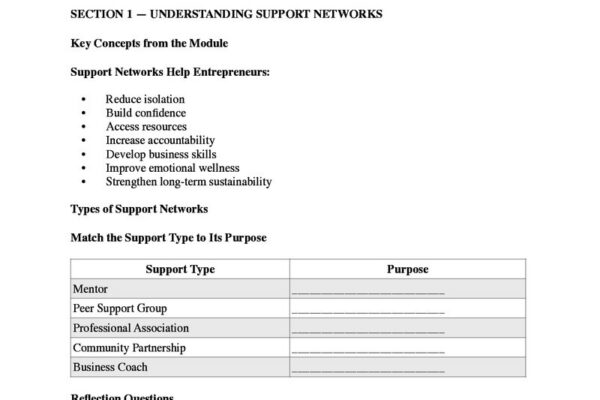
Module 7 Building a Support Network & Business Sustainability
Module 7 Building a Support Network & Business Sustainability Video Presentation This module equips… Read more
Ladies Empowered with Resources
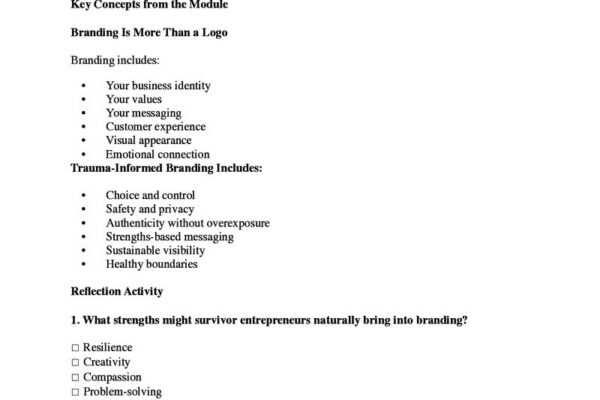
Module 6: Marketing & Branding Through a Trauma Informed Lens
Module 6 Marketing & Branding Through a Trauma Informed Lens Video Presentation This module equips… Read more
Ladies Empowered with Resources
Module 5 Legal & Structural Considerations for Survivor Businesses
Module 5: Legal & Structural Considerations for Survivor Businesses Video Presentation This module equips… Read more
National Network to End Domestic Violence
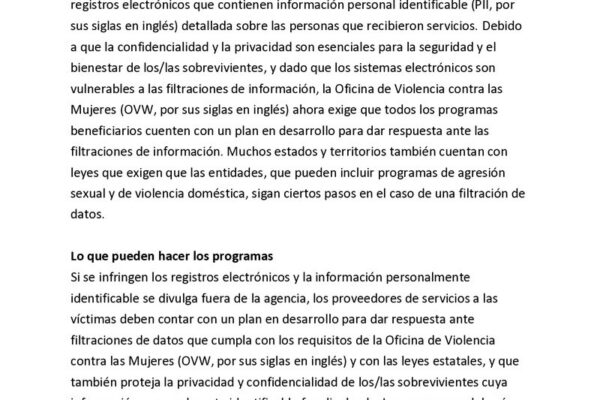
Proveedores de Servicios a las Víctimas y Filtraciones de Datos: Consideraciones para el Desarrollo de Políticas Efectivas
Si se infringen los registros electrónicos y la información personalmente identificable se divulga fuera de… Read more
National Network to End Domestic Violence
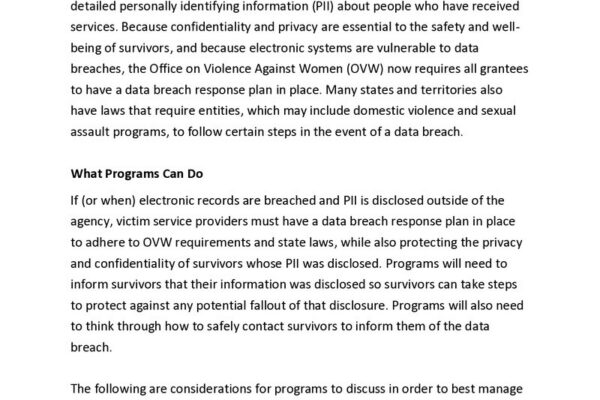
Data Breaches & Victim Service Providers: Considerations for Developing Effective Policies
Many victim service providers now maintain electronic records that contain detailed personally identifying information (PII)… Read more
Inspire Action for Social Change
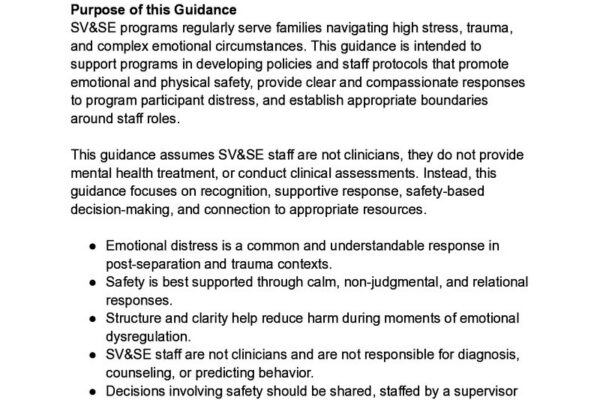
Program Guidance: Supporting Program Participants Experiencing Mental Health Distress in Supervised Visitation and Safe Exchange Programs – Including Expressions of Self-Harm or Harm to Others
This guidance helps SV&SE staff recognize and respond to participants’ mental health distress (including self-harm… Read more
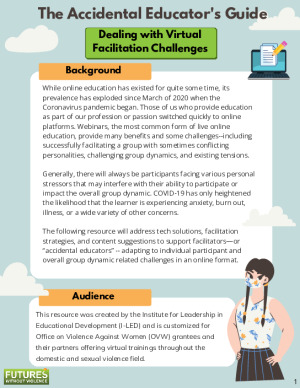
The Accidental Educator’s Guide to Dealing with Virtual Facilitation Challenges
This tool provides tech solutions, facilitation strategies, and content suggestions to support facilitators, or “accidental educators,” adapting to individual participant and overall group dynamic related challenges in an online format.

The Accidental Public Speaker
This tool offers tips to deliver a powerful speech and drive positive change in violence prevention and community engagement.
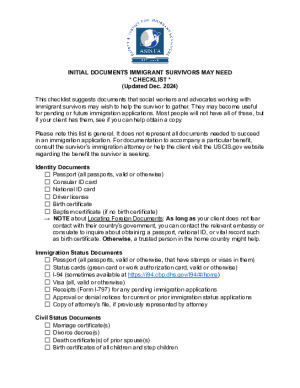
Initial Documents Immigrant Survivors May Need – Checklist (Updated Dec 2024)
This checklist suggests documents that social workers and advocates working with immigrant survivors may wish to help the survivor to gather. They may become useful for pending or future immigration applications. Most people will not have all of these, but if your client has them, see if you can help obtain a copy.
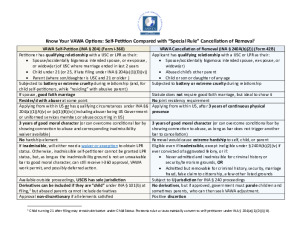
ASISTA New Resource: Know Your VAWA Options: Self-Petition Compared with “Special Rule” Cancellation on of Removal
Effectively representing a survivor of domestic violence requires understanding ALL immigration options they may be able to pursue. This chart provides an at-a-glance review of the requirements for VAWA Self-Petitions and VAWA Cancellation of Removal. It also highlights situations where one may be better than the other for certain survivors, though some survivors may be eligible for both.

I-LED How to Make a Podcast Toolkit
This is the accompanying resource guide to our podcast, “The Accidental Educator”– a podcast for advocates to learn how to make their own podcast.
I-LED Eleven Steps for Designing a Multilingual Accessible Education Program Toolkit
This tool for victim service agencies provides a step-by-step guide to implementing greater language access into both in-person and virtual training events. The content is in English and Spanish.

The Accidental Educator’s Curriculum Writing Toolkit
For any advocate new to creating educational programs, this toolkit offers a simple framework to build effective, learner-focused educational opportunities.
Inspire Action for Social Change
Hamlette eBook for Young People and SVSE Avatar Creator
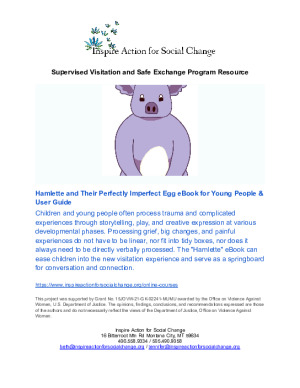
Hamlette and Their Perfectly Imperfect Egg eBook for Young People & User GuideChildren and young people often process trauma and complicated experiences through storytelling, play, and creative expression at various developmental phases. Processing grief, big changes, and painful experiences do not have to be linear, nor fit into tidy boxes, nor does it always need to be directly verbally processed. The “Hamlette” eBook can ease children into the new visitation experience and serve as a springboard for conversation and connection. Supervised Visitation & Safe Exchange Avatar Creator for a Young Person & User Guide. This course provides an interactive platform for young people coming to a supervised visitation program to develop their own supervised visitation avatar character.
Inspire Action for Social Change
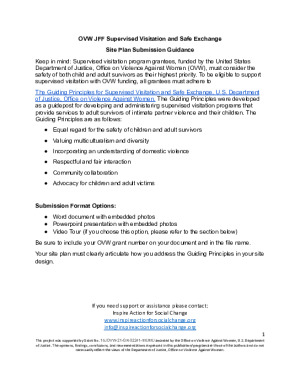
OVW JFF Supervised Visitation and Safe Exchange Site Plan Submission Guidance
This publication provides guidance to OVW JFF grantees in developing their required supervised visitation and safe exchange site plan.

Inspire Action for Social Change
Trauma-Informed Considerations for Supervised Visitation and Safe Exchange Providers eLearning Course
In the course, we will explore building environments that resist retraumatization and foster healing, well-being, and equity through policy, practice, and perspective change. Equity-centered, trauma-informed environments require us to understand how our experiences with identity, culture, community, and institutions shape our perspectives and norms. Ongoing self and team reflection in this area is foundational to understanding the diverse and multi-faceted ways that both trauma and healing show up in our own lives, in our organizations, on our teams, and for the families we serve. This training series works for individuals and teams, invites ongoing reflection to shift practice change, and encourages us to consider ourselves alongside the families we work with in supervised visitation and safe exchange services.