
Recently Added
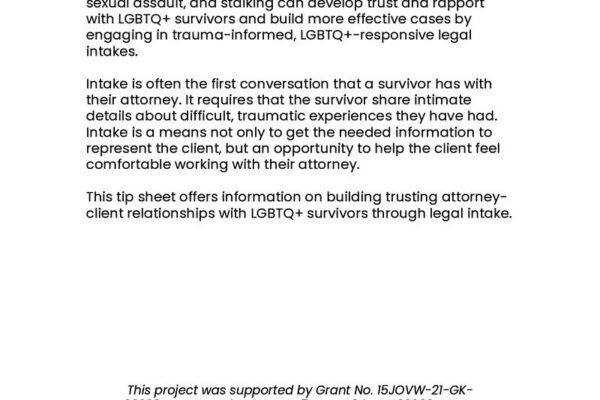
Conducting Legal Intakes with LGBTQ+ Survivors
Attorneys for survivors of domestic violence, dating violence, sexual assault, and stalking can develop trust… Read more
Stalking Prevention, Awareness, and Resource Center (SPARC)
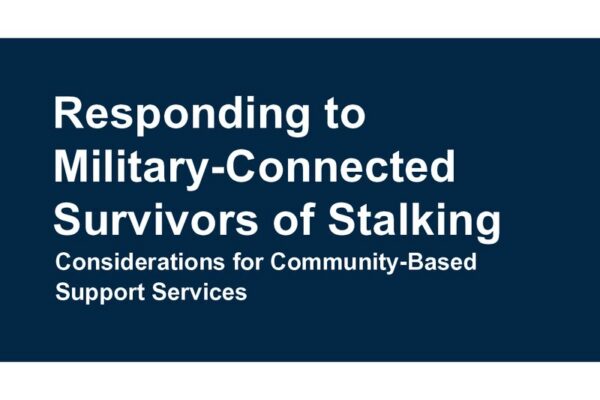
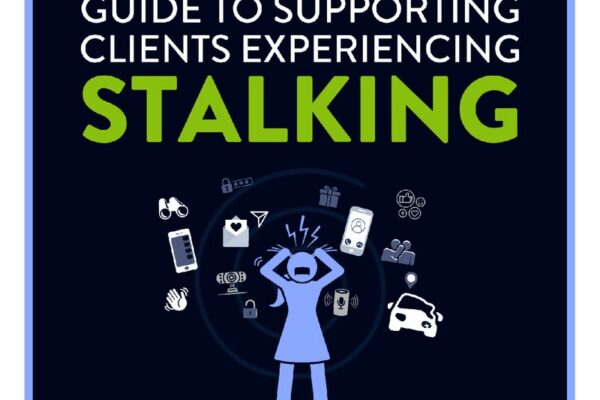
Responding to Military-Connected Survivors of Stalking
Stalking Prevention, Awareness, and Resource Center (SPARC)
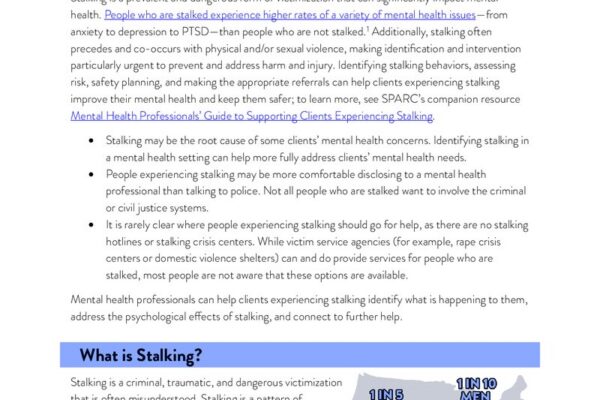
Mental Health Professionals’ Guide to Supporting Clients Experiencing Stalking
Stalking Prevention, Awareness, and Resource Center (SPARC)
Listening for Stalking in Mental Health Settings
Stalking Prevention, Awareness, and Resource Center (SPARC)
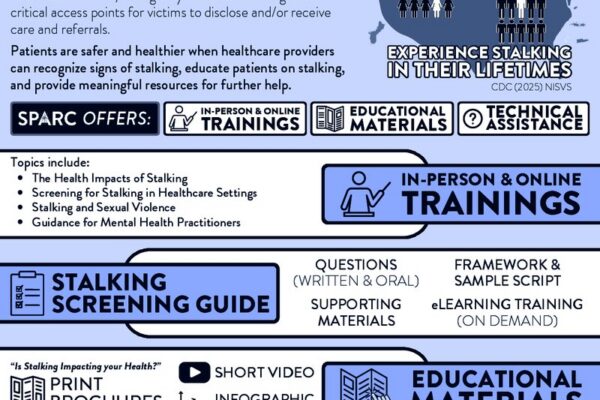
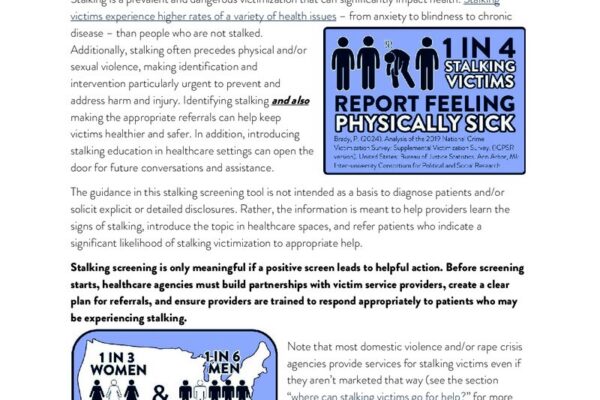
Guide to Screening for Stalking in Healthcare Settings

Stalking Prevention, Awareness, and Resource Center (SPARC)
Fact sheet: Stalking (Spanish)
A fact sheet (in Spanish) sharing statistics about stalking victimization in the United States
Stalking Prevention, Awareness, and Resource Center (SPARC)
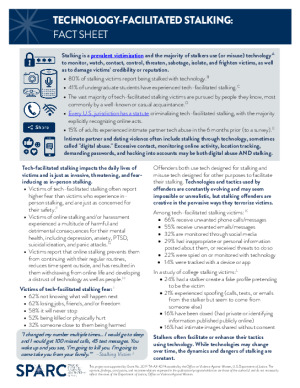
Fact sheet: Stalking & Technology
A fact sheet highlighting how technology can be used to facilitate a stalking course of conduct

Stalking Prevention, Awareness, and Resource Center (SPARC)
Protective Order Violations as Stalking
This resource amplifies best practices for handling violations of protective orders, including treating even a single violation as part of a course of conduct, and how to strategically handle such a violation (or violations, as is often the case) during an investigation and subsequent prosecution. It provides an overview of protection orders as well as a primer on enforcing them in cases of complicated jurisdiction, how prosecutors can charge the often co-occurring offense of stalking without running into issues of double jeopardy, and when prosecutors may want to use their discretion to do so.

Prosecutorial Considerations Before Next Level Compulsion of Victim Testimony in Crimes of SV and IPV
Stalking Prevention, Awareness, and Resource Center (SPARC)
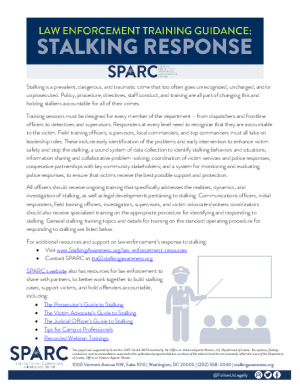
Law Enforcement Training Guidance: Stalking Response
When training on law enforcement response to stalking, a policy helps everyone to understand the roles that others play and how they all fit together, but each role has additional steps that should be part of practice and procedure. This guide is an expansion of SPARC’s Law Enforcement Agency Model Policy that includes additional important pieces that should be included in any training.

Stalking Prevention, Awareness, and Resource Center (SPARC)
Fact sheet: Stalking & College Campuses (Spanish)
A fact sheet (in Spanish) highlighting the prevalence and impacts of stalking on college campuses
Stalking Prevention, Awareness, and Resource Center (SPARC)
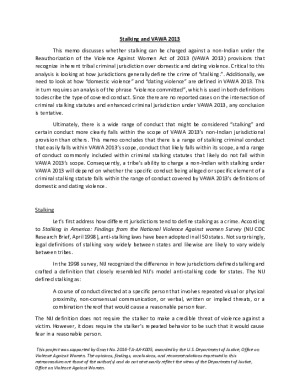
Stalking and VAWA 2013

Stalking Prevention, Awareness, and Resource Center (SPARC)
Discussion Guide: “YOU” Season 5
A guide outlining potential discussion questions and activities on the fifth and final season of the Netflix television show “You”.
Advocating for Clients while Coping with Trauma
The webinar will explore practical strategies for providing compassionate, effective legal advocacy while recognizing and addressing the impact of trauma on clients. Participants will learn how to build trust, communicate sensitively, and maintain professional resilience in challenging cases.
Stalking Prevention, Awareness, and Resource Center (SPARC)
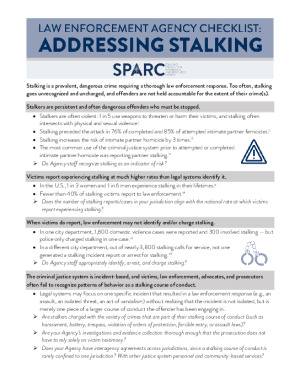
Law Enforcement Agency Checklist: Addressing Stalking
A checklist to assess how a law enforcement agency identifies and responds to stalking cases.