
Recently Added
National Network to End Domestic Violence
Proveedores de Servicios a las Víctimas y Filtraciones de Datos: Consideraciones para el Desarrollo de Políticas Efectivas
Si se infringen los registros electrónicos y la información personalmente identificable se divulga fuera de… Read more
National Network to End Domestic Violence
Data Breaches & Victim Service Providers: Considerations for Developing Effective Policies
Many victim service providers now maintain electronic records that contain detailed personally identifying information (PII)… Read more
Inspire Action for Social Change
Program Guidance: Supporting Program Participants Experiencing Mental Health Distress in Supervised Visitation and Safe Exchange Programs – Including Expressions of Self-Harm or Harm to Others
This guidance helps SV&SE staff recognize and respond to participants’ mental health distress (including self-harm… Read more
Police Executive Research Forum
Tip Sheet: Ensuring Accountability in Officer-Involved Domestic Violence
Creating legitimacy and ensuring public trust begin with holding our own professionals accountable and enforcing… Read more
Police Executive Research Forum
Tip Sheet: Recognizing and Challenging Assumptions and Stereotypes
Every call involving domestic violence or sexual assault requires more than just a procedural response.… Read more
Police Executive Research Forum
5 Tips on Identifying the Predominant Aggressor in Domestic Violence Incidents
Law enforcement officers are often called upon to respond to domestic dispute calls in which… Read more
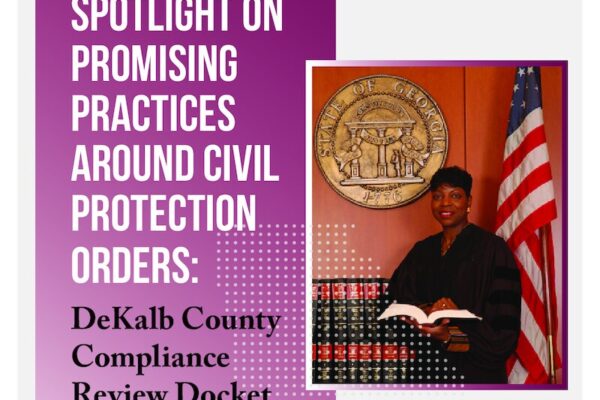
National Council of Juvenile and Family Court Judges
Spotlight on Promising Practices around Civil Protection Orders: DeKalb County Compliance Review Docket
This publication is an interview with Chief Judge Berryl Anderson of DeKalb County Magistrate Court, DeKalb County, Georgia. The interview focuses on the creation and implementation of DeKalb County’s Civil Protection Order Compliance Review Docket, an Office on Violence Against Women designated Model Court.
National Network to End Domestic Violence
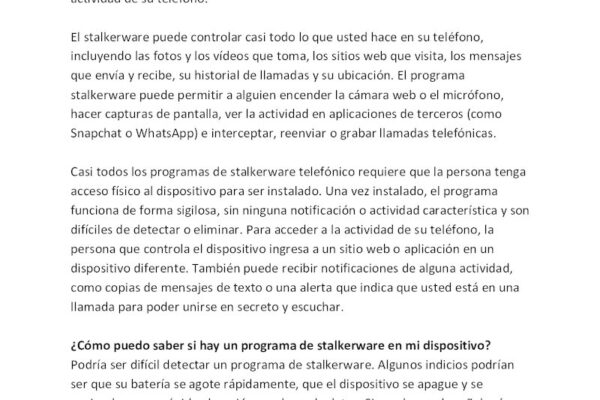
Stalkerware: Seguridad para sobrevivientes
El stalkerware se refiere a las herramientas – aplicaciones (apps), programas de software y dispositivos – que permiten que otra persona vigile secretamente la actividad de su tel?fono. Responder a un programa de stalkerware; Documenting the Stalkerware; Eliminar un programa de stalkerware; C?mo prevenir el programa de stalkerware; and Cuando no se trata de un programa de stalkerware.
Stalking Prevention, Awareness, and Resource Center (SPARC)
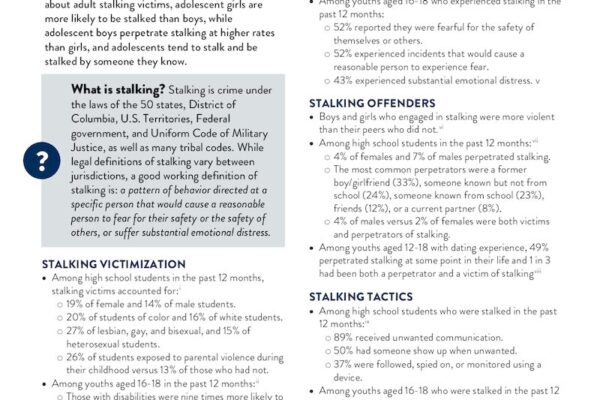
Fact sheet: Stalking & Adolescents
A fact sheet on the prevalence of stalking among adolescents. While research on stalking among adolescents is limited, estimates generally show that adolescents are stalked at higher rates than adults.
Stalking Prevention, Awareness, and Resource Center (SPARC)
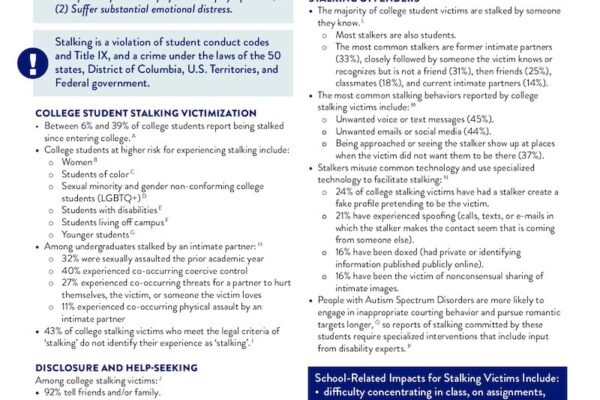
Fact sheet: Stalking & College Campuses
A fact sheet about the prevalence of stalking on college campuses and among college-age adults (ages 18 to 24).
Stalking Prevention, Awareness, and Resource Center (SPARC)
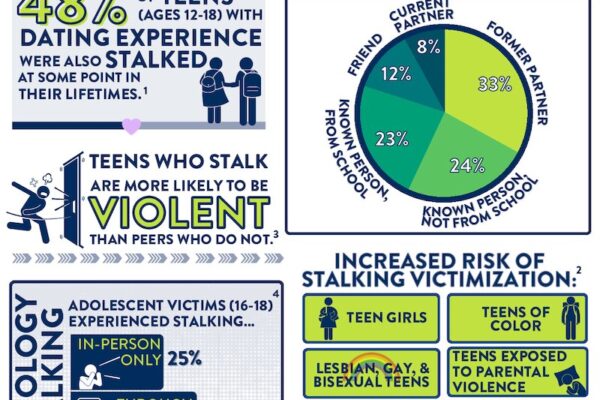
Infographic: Stalking & Adolescents
An infographic on the prevalence of stalking among adolescents.
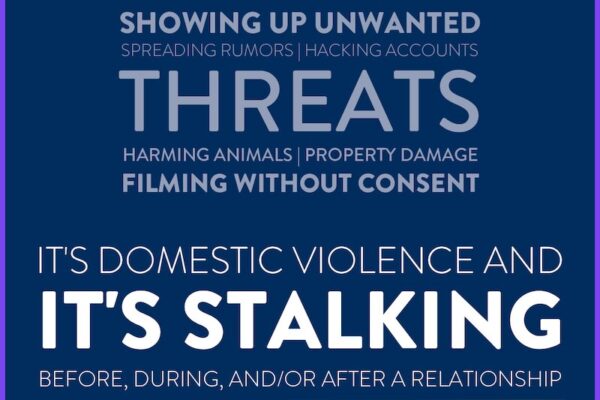
Stalking Prevention, Awareness, and Resource Center (SPARC)
Poster: Stalking & Domestic Violence
A poster detailing actions that fall under the categories of domestic violence and stalking
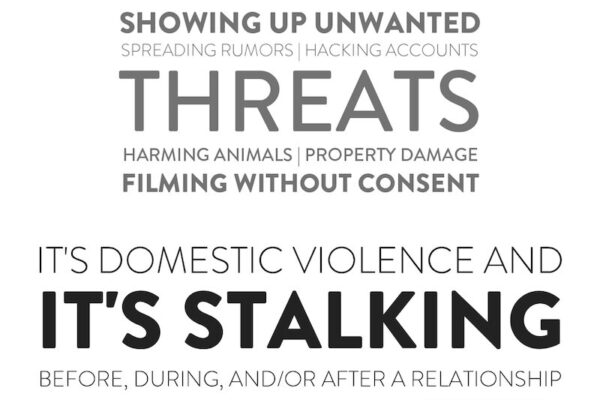
Stalking Prevention, Awareness, and Resource Center (SPARC)
Poster: Stalking & Domestic Violence (black and white)
A black and white version of a poster detailing actions that fall under the categories of domestic violence and stalking
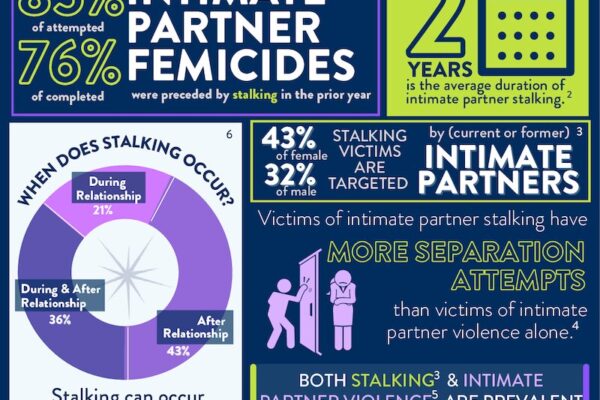
Stalking Prevention, Awareness, and Resource Center (SPARC)
Infographic: Stalking & Intimate Partner Violence
An infographic on the correlation between stalking and intimate partner and/or domestic violence.
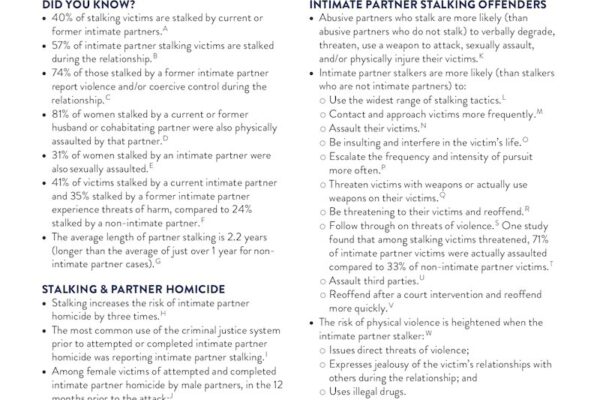
Stalking Prevention, Awareness, and Resource Center (SPARC)
Fact sheet: Stalking & Intimate Partner Violence
A fact sheet highlighting the intersection of stalking and intimate partner and/or domestic violence.
Stalking Prevention, Awareness, and Resource Center (SPARC)
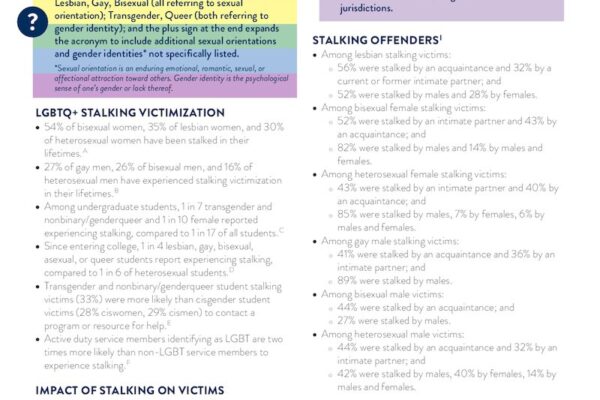
Fact sheet: Stalking & LGBTQ+ Individuals
A fact sheet about the stalking victimization of LGBTQ+ individuals.