
Recently Added
Attorney Safety Guide
Attorneys who work on cases involving domestic and dating violence, sexual assault, and stalking (DVSAS)… Read more
Battered Women’s Justice Project
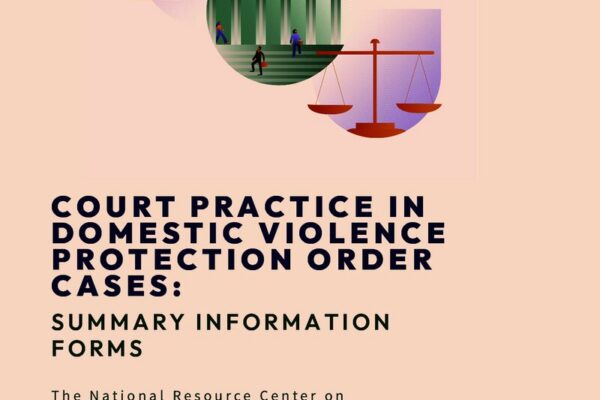
Court Practice in Domestic Violence Protection Order Cases: Creating Court Summary Information Forms
Because protection orders can be the basis by which someone is ineligible to receive a… Read more

Battered Women’s Justice Project
Court Practice in Misdemeanor Crimes of Domestic and Dating Violence Cases: Creating Court Summary Information Forms
Because misdemeanor convictions for crimes of domestic and dating violence can be the basis by… Read more
Battered Women’s Justice Project
U.S. v. Rahimi: Understanding the Implications for Protection Orders and Firearms Prohibitions
In June 2024, the U.S. Supreme Court upheld the federal law that prohibits domestic abusers… Read more

Battered Women’s Justice Project
What High Schools and Colleges Need to Know About Dating Violence and Firearms
In the United States, one in eight high school students reports having been subjected to… Read more

National Council of Juvenile and Family Court Judges
Custody and Parenting Time Orders: Compliance Monitoring and Enforcement Strategies for Courts
This document provides a set of suggested practices and strategies for consideration by courts seeking to improve compliance with custody and parenting time orders. Main topics include exercising judicial leadership, crafting orders with enforceability and compliance in mind, suggested instructional materials to litigants on enforcement and modification, and addressing non-compliance.
National Council of Juvenile and Family Court Judges
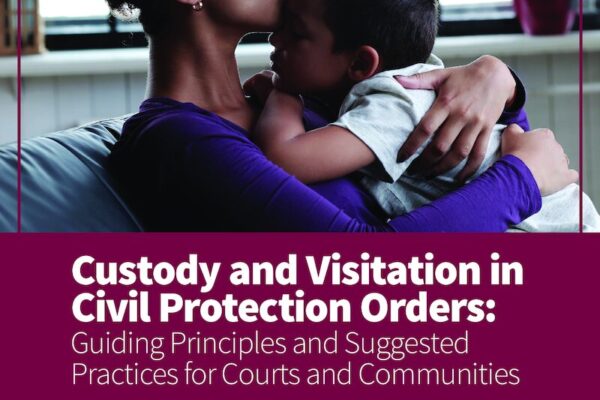
Custody and Visitation in Civil Protection Orders: Guiding Principles and Suggested Practices for Courts and Communities
Despite the fact that the majority of state civil protection order statutes confer legal authority upon judicial officers to include custody, visitation, and other child-related relief in civil protection orders (CPOs), judges often do not exercise that authority. These guiding principles and suggested practices are intended to assist communities’ efforts to address this disparity. They are the product of a collaborative effort involving the National Council of Juvenile and Family Court Judges (NCJFCJ), the Battered Women’s Justice Project (BWJP), the Center for Court Innovation (CCI), and a group of national experts, including judges, attorneys, and advocates.

Cyber Abuse and Title IX: A Resource for Campus Safety Officials
Title IX prohibits academic institutions receiving federal funding from discriminating on the basis of sex. It requires schools to adequately respond when the school has actual knowledge of sexual harassment or other sex-based discrimination. This Q & A addresses when and how a school must respond to cyber abuse.

Cyber Abuse Project Listening Session Analysis
Break the Cycle and CALCASA conducted a series of 10 listening sessions and interviews with criminal justice professionals, including campus law enforcement, campus safety staff, school resource officers and administrators, judges, court personnel, and youth from across the country. Sessions were designed to gather input from those responding to and impacted by cyber abuse among youth. This analysis identifies strategies and challenges to addressing cyber abuse among youth and gives direction for the development of new technical assistance resources for criminal justice professionals on the use/misuse of technology in dating & domestic violence, sexual assault, and stalking cases among youth.

Cyber Abuse Project Literature Review
In response to the ongoing prevalence of cyber abuse, the California Coalition Against Sexual Assault and Break the Cycle are working to build the capacity of criminal justice professionals to understand and respond to these issues. In this review, we will discuss the misuse of technology in dating abuse, sexual assault, and stalking situations among youth 12-24, including non-consensual sharing of intimate images, cyber-harassment, and cyberstalking. The review will also address how law and criminal justice professionals, including college and school safety professionals currently respond to these cases. We will also suggest areas where further research would benefit the field.
Cyber Abuse Project Toolkit
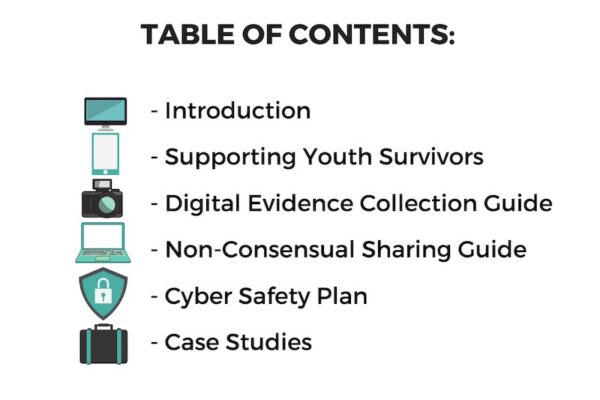
The Cyber Abuse Project (CAP) is an initiative of Break the Cycle and the California Coalition Against Sexual Assault. CAP aims to provide training and technical assistance to criminal justice professionals and other adult first-responders on the use and misuse of technology in sexual assault, domestic violence, dating violence and stalking (including cyber-stalking) cases involving young people ages 12-24. The tools available in this toolkit help inform young people, and the caring adults in their lives, about their options after experiencing different forms of cyber abuse. These tools also help to promote the autonomy of young survivors as they determine how to proceed, particularly when pursuing criminal justice remedies.

National Network to End Domestic Violence
Data Brokers: What They Are and What You Can Do About Them
The resource explains the risks to survivor privacy posted by data brokers and different potential strategies to address this issue in privacy planning. It is an overhaul of the previous resource on data brokers and contains new content. The intended audience is survivors and victim service providers.
Private: Native Alliance Against Violence
DATA Project TA Offerings
This is a brochure with the variety of services that the DATA Project can provide to OVW tribal DVSA program grantees.
Private: Native Alliance Against Violence
Data Project Toolkit
This program assessment toolkit was developed to capture the work of the project over the past two years; serving as a simple guide for tribal domestic violence and sexual assault programs to measure goals, objectives, and outcomes. Within it, you will find tools, resources, and information that can assist programs in better understanding the needs for program assessment and how to approach and conduct meaningful program assessments. View the toolkit by clicking the button below.
National Network to End Domestic Violence
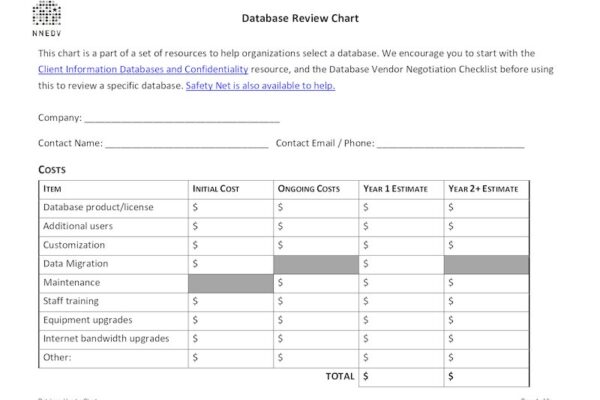
Database Review Chart
This document is a worksheet in a set of resources that is designed to assist victim service providers in selecting a database. The set of resources also includes “Client Information Databases & Confidentiality: A comprehensive guide for service providers,” and a checklist the pairs with this worksheet to be used when negotiating with database vendors.