
Recently Added
Stalking Prevention, Awareness, and Resource Center (SPARC)
Responding to Military-Connected Survivors of Stalking
Stalking Prevention, Awareness, and Resource Center (SPARC)
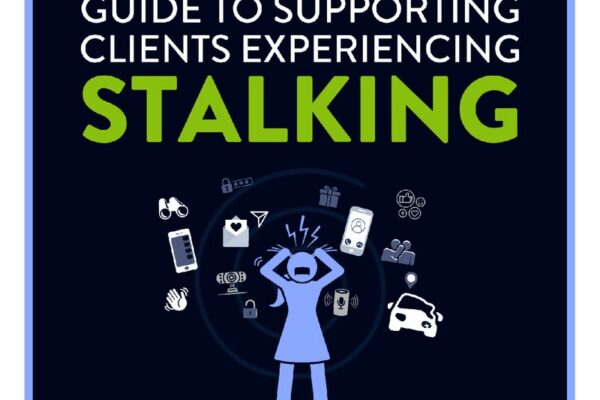
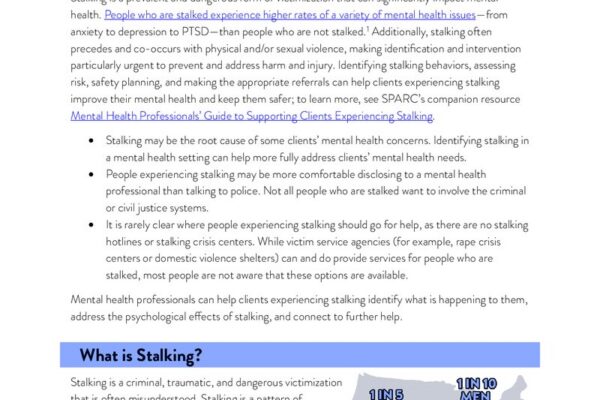
Mental Health Professionals’ Guide to Supporting Clients Experiencing Stalking
Stalking Prevention, Awareness, and Resource Center (SPARC)
Listening for Stalking in Mental Health Settings
Stalking Prevention, Awareness, and Resource Center (SPARC)
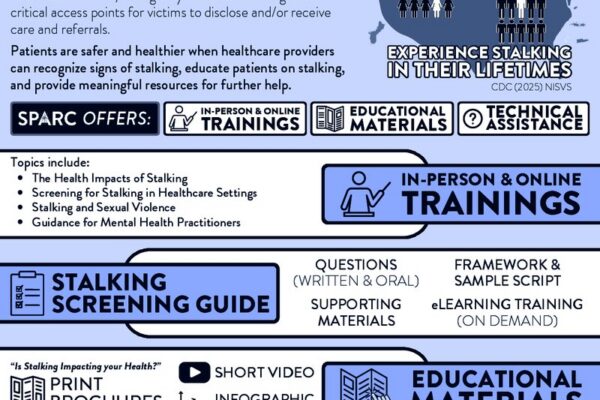
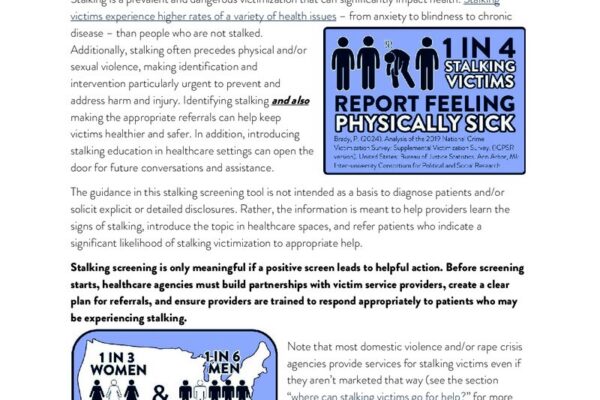
Guide to Screening for Stalking in Healthcare Settings
Stalking Prevention, Awareness, and Resource Center (SPARC)
Understanding the Counterman v. Colorado Supreme Court Decision
National Organization for Victim Advocacy
Toolkit for Serving Military-Connected Survivors of Domestic Abuse
This toolkit includes a checklist and resources to provide community professionals and advocates with a guide for assessing and assisting victims/survivors of domestic abuse who have a connection to the U.S. Armed Forces.
National Organization for Victim Advocacy
Protecting the Rights of Military-Connected Victims – Resources and Links
The toolkit, created by NOVA’s partners at the National Crime Victim Law Institute (NCVLI), will empower legal professionals with the tools and knowledge necessary to make a tangible difference in military-connected survivors navigating the legal system.
National Organization for Victim Advocacy
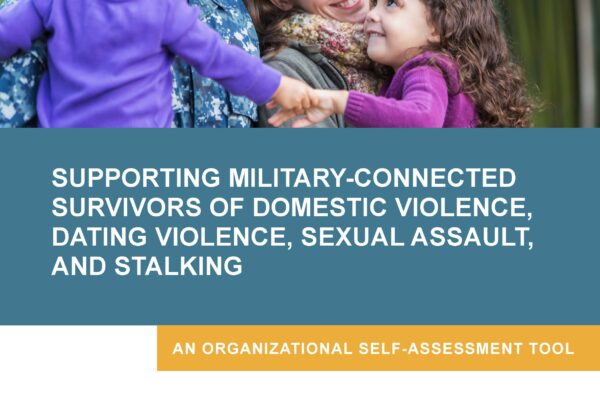
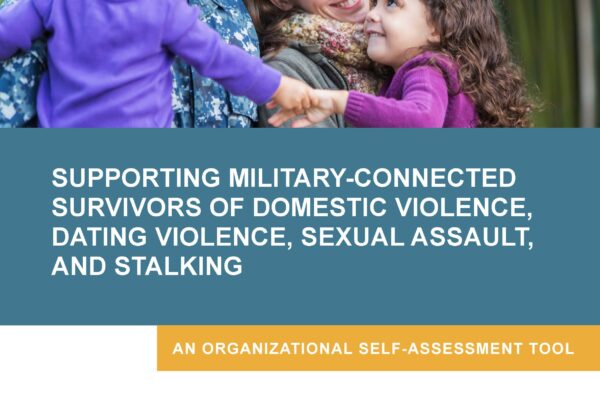
Organizational Self-Assessment for Supporting Military-Connected Survivors of DVSAS
This tool is meticulously crafted to help civilian agencies like yours assess and enhance approaches to serving military-connected survivors of Domestic Violence, Dating Violence, Sexual Assault, and Stalking (DVSAS). It provides deep insights into their unique challenges and guides you through a detailed evaluation process to improve services and outcomes.
National Organization for Victim Advocacy
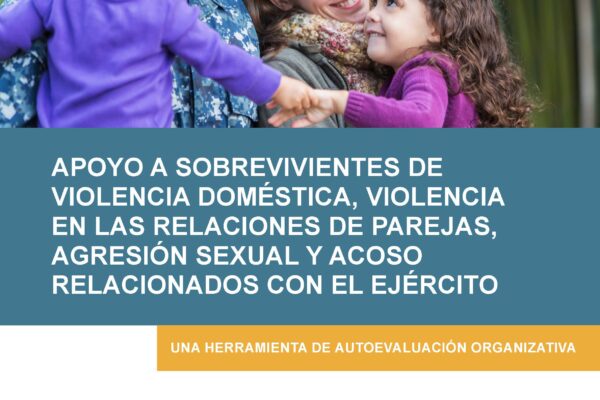
Organizational Self-Assessment for Supporting Military-Connected Survivors of DVSAS (En Español)
Esta herramienta ha sido diseñada meticulosamente para ayudar a las agencias civiles como la suya a evaluar y mejorar los enfoques para atender a las víctimas de violencia doméstica, violencia en el noviazgo, agresión sexual y acoso (DVSAS) relacionadas con el ámbito militar. Proporciona información detallada sobre sus desafíos específicos y le guía a través de un proceso de evaluación exhaustivo para mejorar los servicios y los resultados.
International Organization for Adolescents
Organizational Self-Assessment to Better Support Military-Connected Survivors of DVSAS
National Organization for Victim Advocacy
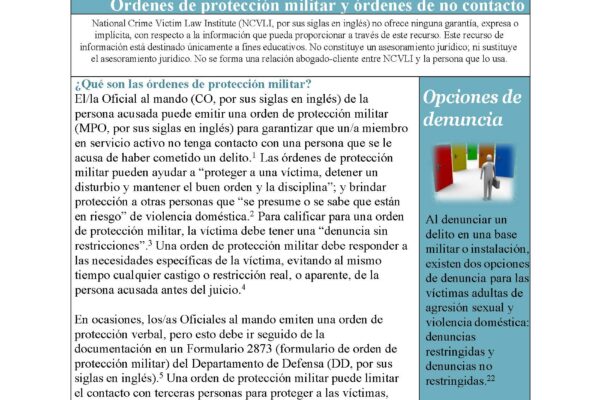
Military-Protective Orders and No Contact Orders Tip Sheet (En Español)
National Organization for Victim Advocacy
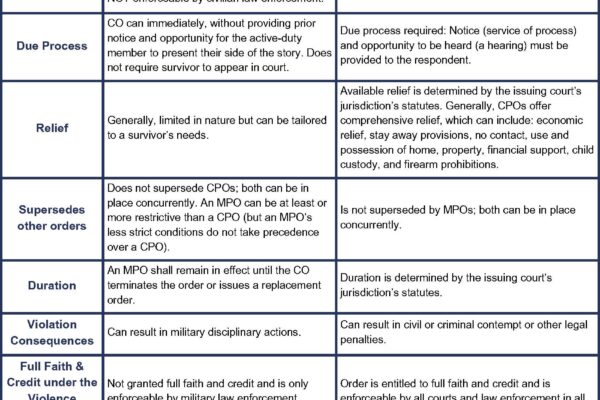
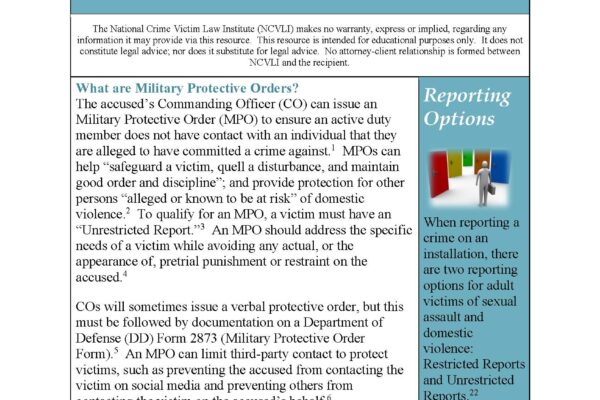
Military-Protective Orders and No Contact Orders Tip Sheet

National Organization for Victim Advocacy
Military-Connected Survivors in Rural Communities Tip Sheet (En Español)
National Organization for Victim Advocacy
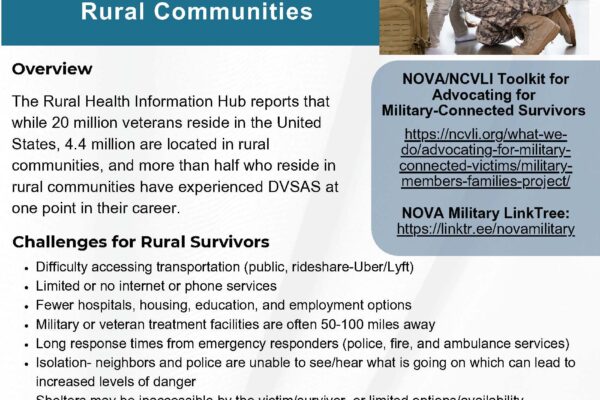
Military-Connected Survivors in Rural Communities Tip Sheet
National Organization for Victim Advocacy
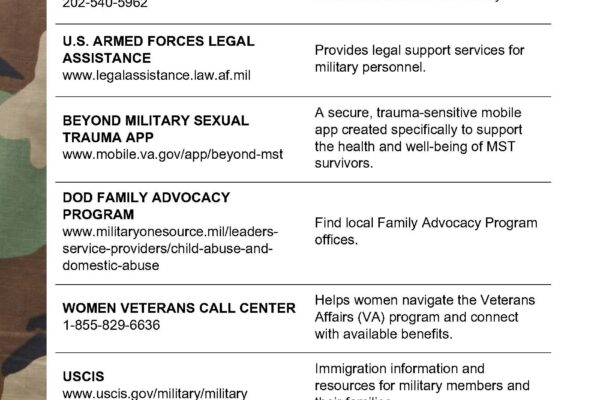
Military-Connected Survivor Resource Guide 2024
From military-specific resources to culturally responsive practices, this guide bridges the gap between military and civilian systems, ensuring survivor-centered support for those who need it most.